Introduction
Swimming is a life skill, a sport, and a powerful tool for child development. In Moscow—where indoor pools and seasonal open-water swimming both play a role—parents and coaches must balance technique, safety, and physical training. This guide outlines age-appropriate progressions, practical technique tips, safety rules for city pools and natural waters, and dryland training you can do in Moscow’s climate.
Why swimming matters for children
— Improves cardiovascular fitness, coordination, and flexibility.
— Builds confidence, discipline, goal-setting and teamwork.
— Enhances motor development and bilateral coordination crucial during early childhood.
— Teaches life-saving skills and water awareness that reduce drowning risk.
Finding the right program in Moscow
— Look for certified instructors (swim-coach qualifications, first aid and lifeguard training).
— Choose the format that fits your child and schedule: baby/toddler classes, group lessons, private coaching, competitive swim clubs, or seasonal open-water programs.
— Inspect facilities: warm showers, clean changing areas, appropriate pool depth, visible lifeguards, and manageable class sizes (smaller groups for beginners and young children).
— Ask about progression plans, testing/assessment frequency, and communication with parents.
Age-based learning progression and objectives
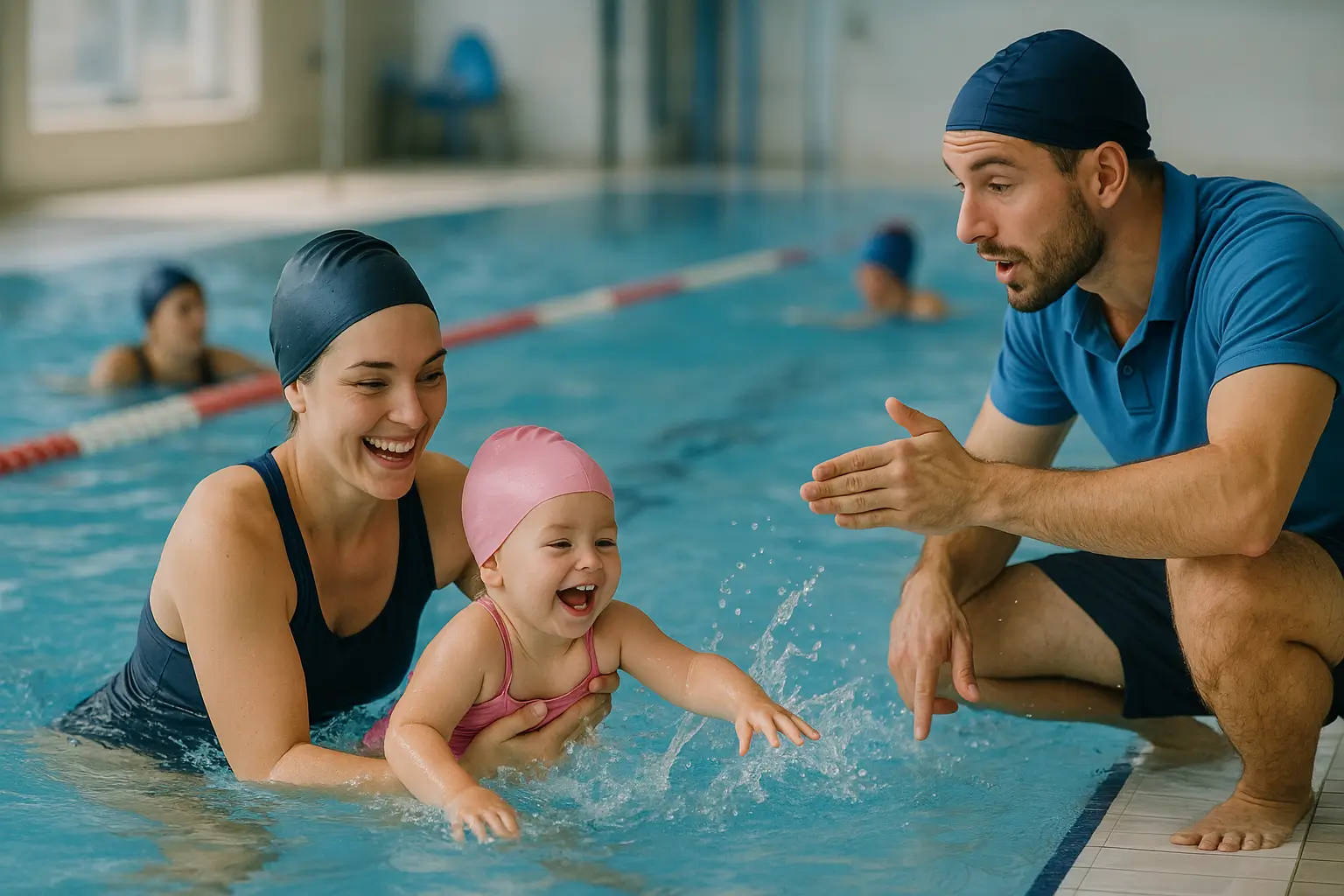
— 0–3 years (water familiarization)
— Goals: comfort in water, basic breath control, submersion tolerance, getting in/out safely.
— Methods: parent-child classes, short playful sessions (10–20 min), toys and songs, gentle submersion games.
— 3–6 years (basic water skills)
— Goals: independent floating, glides, kicking with board, basic front/back movement, simple breath control.
— Methods: guided repetition, short drills, games to reinforce skills.
— 6–10 years (stroke development)
— Goals: coordinated arm/leg movement for freestyle and backstroke, introduction to breaststroke timing, safe turns and pool etiquette.
— Methods: drills focusing on body position, bilateral breathing, rhythmic kicking, and easy endurance sets.
— 10+ years (refinement and fitness)
— Goals: efficient stroke mechanics, starts, turns, race pacing (if competitive), and structured dryland training.
— Methods: technique breakdown, stroke-specific sets, interval training, strength and mobility work outside the pool.
Key technique tips (applicable in Moscow pools)
— Freestyle (crawl)
— Keep a horizontal, streamlined body line; head neutral, eyes down.
— Rotate the torso with each stroke to lengthen reach and reduce shoulder strain.
— Practice bilateral breathing to balance stroke and reduce neck tension.
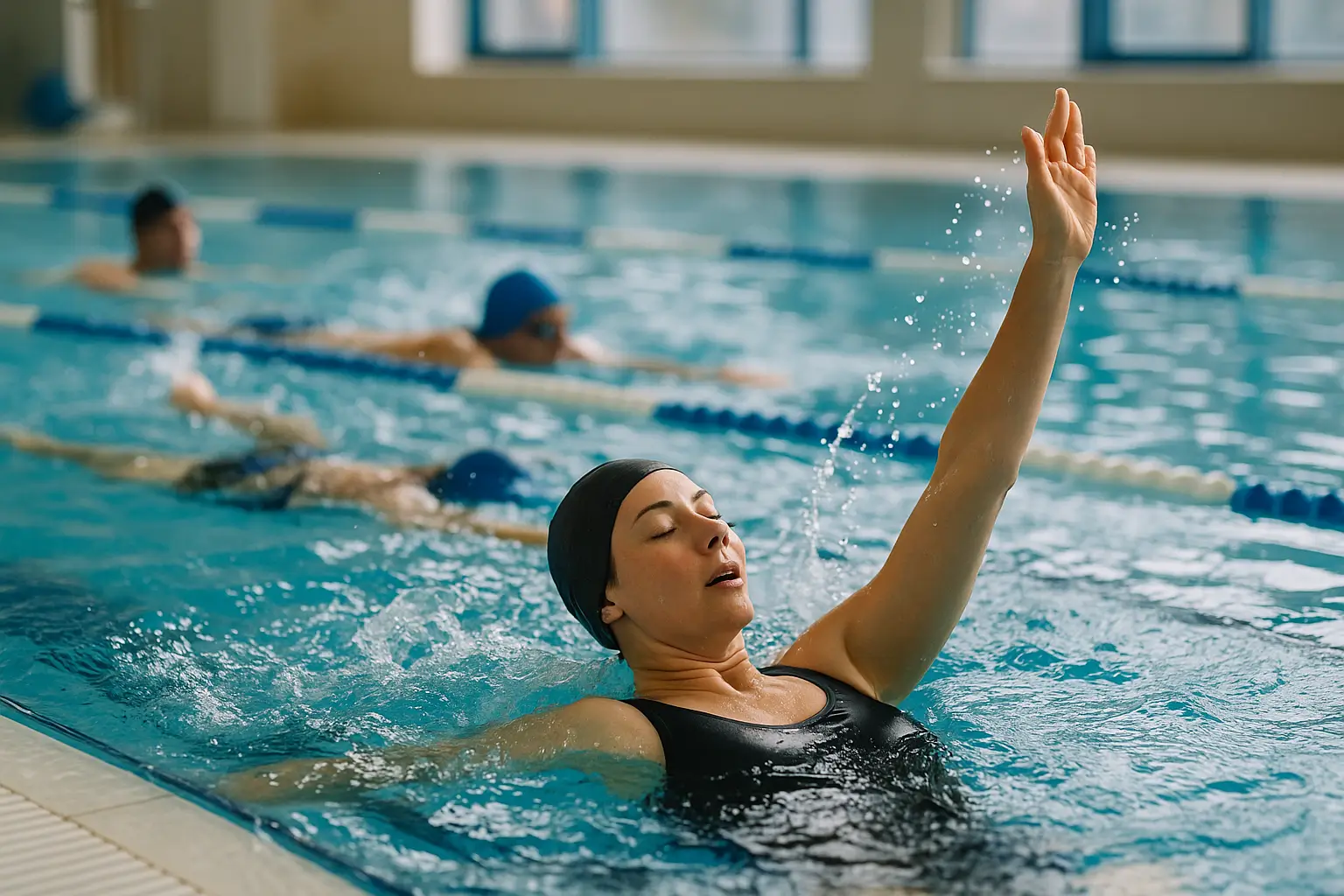
— Backstroke
— Maintain a flat, horizontal posture; avoid excessive arching.
— Steady flutter kick, and keep ears under water.
— Use shoulder rotation similar to freestyle for longer pulls.
— Breaststroke
— Emphasize timing: pull — breathe — kick — glide.
— Keep the head low when breathing to maintain forward momentum.
— Work on whip kick flexibility (ankles and hips).
— Butterfly (introduction)
— Focus on body undulation and rhythm before power; two kicks per arm cycle.
— Strong core and timing are crucial—start with short distances and drills.
— Starts and turns
— Teach safe, progressive starts from the poolside and block when ready.
— Introduce somersault turns and flip turns separately, using drills and ledges for confidence.
Practical drills to use in lessons
— Streamline push-offs: push, glide, then add a few dolphin kicks or flutter kicks.
— Catch-up drill (freestyle): one arm waits while the other completes a stroke to improve reach and timing.
— Side-kick drill: work on balance and breathing by kicking on the side with one arm extended.
— Pull buoy sets: isolate arm technique to improve stroke mechanics.
— Back-kick with board: strengthen backstroke kick and body alignment.
Training planning — sample weekly schedules
— Beginners (3–6 years): 2 sessions/week, 20–30 minutes each.
— Developing swimmers (6–10 years): 2–3 sessions/week, 30–45 minutes.
— Competitive track (10+ years): 4–6 pool sessions/week + 2–3 dryland sessions; sessions 60–120 minutes depending on level.
Dryland training (outside the pool)
— Warm-up and mobility
— Dynamic warm-ups: leg swings, arm circles, hip openers.
— Shoulder mobility drills to preserve range of motion.
— Strength and power
— Core: planks, dead bugs, Russian twists.
— Shoulders and back: band pulls, rows, scapular push-ups.
— Legs: squats, lunges, calf raises, and plyometrics for starts/dive power.
— Flexibility and injury prevention
— Regular stretching for shoulders, chest, hips, and ankles.
— Emphasize scapular stability and rotator cuff endurance.
— Sample 20–30 minute dryland routine (2–3×/week)
— 5 min dynamic warm-up
— 10 min strength circuit (3 rounds: 10 bodyweight squats, 8–12 band rows, 30s plank)
— 5–10 min plyometrics/coordination (box step-ups, short hops)
— 5 min mobility/cool down
Safety in pools and on Moscow’s waterways
— Pool safety basics
— Always swim where a lifeguard is present.
— Supervise children closely; maintain visual contact and be within arm’s reach for young/non-swimmers.
— Teach pool rules: no running, no diving in shallow water, use ladders and steps.
— Open water and seasonal considerations (lakes, rivers, reservoirs)
— Moscow summers bring many swimmers to rivers and lakes—be aware of currents, sudden depth changes, and boat traffic.
— Avoid swimming near boat channels, intake structures, and steep drop-offs.
— Never swim alone; use designated swimming areas. Alcohol and water are a dangerous mix—never swim after drinking.
— Ice and cold-season safety
— In winter, frozen water is risky; only use officially maintained rinks and