Introduction
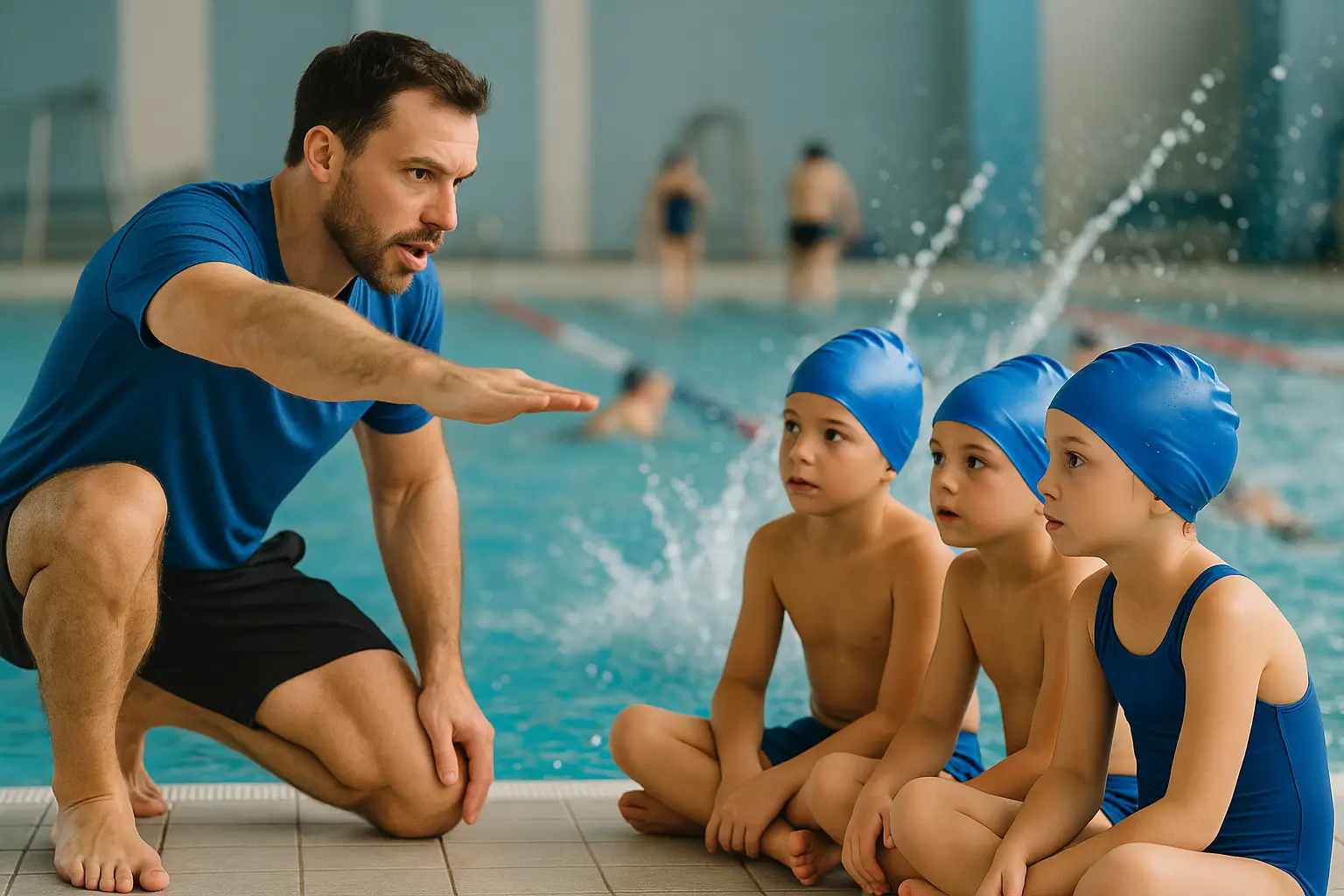
Swimming is a life skill, a sport, and a tool for healthy child development. In Moscow—where indoor pools are the norm and open-water swimming is seasonal—parents and coaches must balance technique, safety, and physical preparation both in and out of the water. This guide covers practical tips for teaching children, building technique, ensuring safety in Moscow’s environment, and designing effective dryland and pool training.
Why swimming matters for children
— *Safety first*: reduces drowning risk and increases confidence around water.
— *Physical development*: builds cardiovascular fitness, strength, coordination, and flexibility.
— *Cognitive & social benefits*: discipline, goal-setting, teamwork, and improved concentration.
— *Lifelong activity*: low-impact exercise suitable across the lifespan.
Age-specific teaching approach
— 0–3 years: water familiarization
— Focus: parent-child bonding, trust, breath control, gentle submersion games.
— Methods: warm water, short sessions (10–20 min), songs and toys, hold and support techniques.
— 3–6 years: basic skills and safety
— Focus: independent floating, kicking, blow bubbles, simple glides.
— Methods: play-based drills, short attention spans, positive reinforcement.
— 6–10 years: technique foundations
— Focus: correct body position, basic strokes (freestyle, backstroke), breathing rhythm.
— Methods: repetition, simple drills, introduction to rules and pool etiquette.
— 10+ years: stroke refinement and fitness
— Focus: breaststroke and butterfly basics, starts, turns, endurance.
— Methods: structured sets, video feedback, goal-setting for club participation or competitions.
Core swimming techniques (practical cues)
— Freestyle (front crawl)
— Body: long, horizontal, look down/slightly forward.
— Breathing: exhale underwater, turn head to side for inhale—one-arm breathing drill.
— Arms: high elbow recovery, strong catch and pull.
— Kick: small, fast flutter kicks from hips.
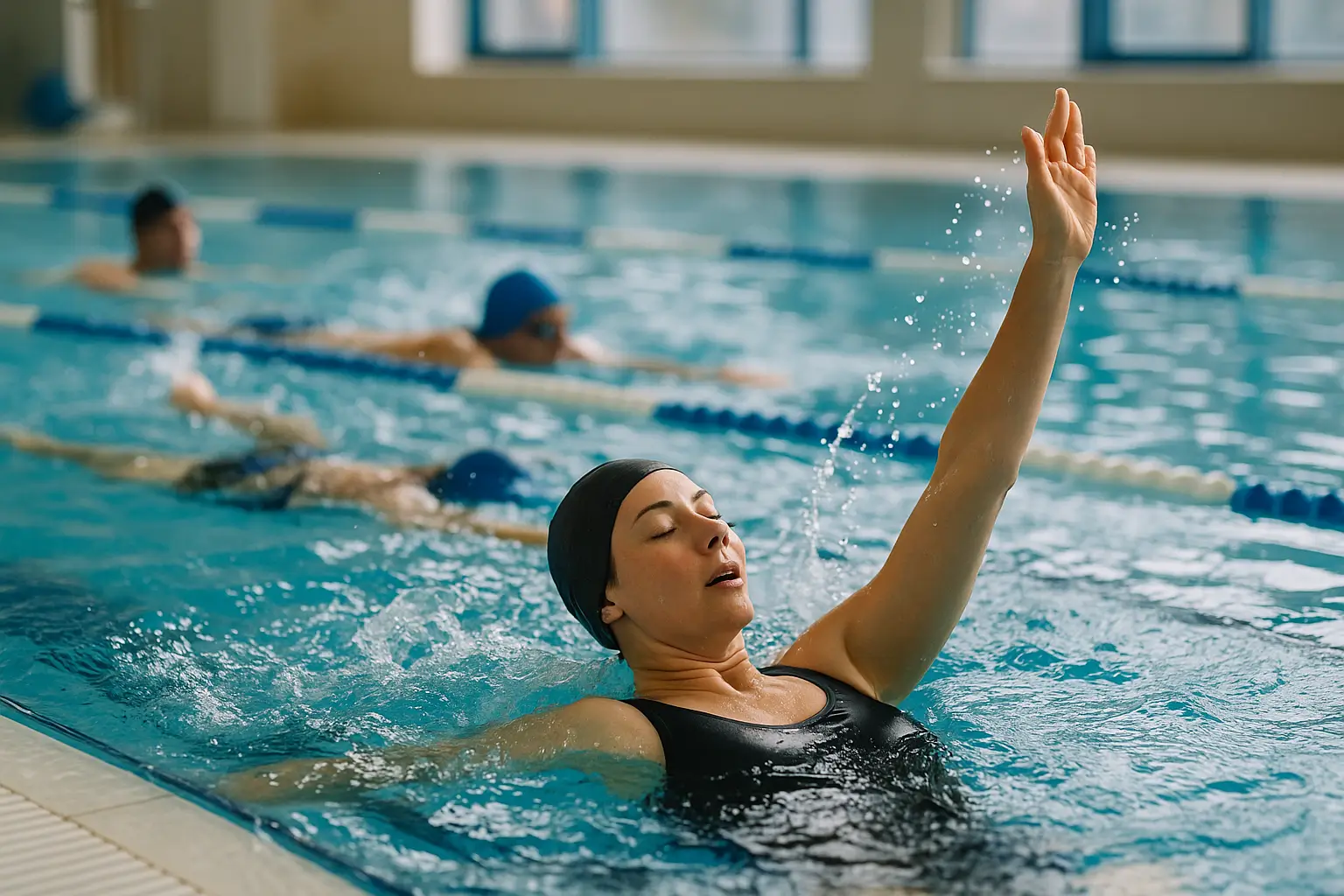
— Backstroke
— Body: neutral head position, hips high.
— Arms: straight-arm recovery, strong underwater pull.
— Kick: steady flutter from hips; eyes on ceiling to maintain alignment.
— Breaststroke
— Timing: glide–pull–kick sequence; avoid continuous splashing.
— Kick: frog-style—turn heels out and whip back.
— Head: lift to breathe during the glide phase.
— Butterfly
— Body: undulating wave from chest through hips.
— Arms: simultaneous pull; recover over water.
— Kick: two dolphin kicks per cycle—one during pull, one during recovery.
— Drills to improve technique
— Catch-up drill, single-arm freestyle, fist swimming (feel forearm), sculling, kickboard repeats.
Safety on the water (Moscow-specific considerations)
— Choose certified pools and instructors
— Check municipal resources (e.g., mos.ru) and club credentials. Look for coaches with federation certificates.
— Supervision and rules
— Always ensure lifeguard presence; for children, use the buddy system and adult supervision regardless of skill.
— Emergency protocols
— Know pool emergency exits, location of rescue equipment, and how to call for help—Russia emergency number: *112*.
— Open water precautions
— Moscow’s open-water swimming is seasonal and should only be done at designated, supervised spots.
— Avoid swimming alone; check water quality and temperature; wear a bright swim cap and, in cooler months, a neoprene suit.
— Cold water and winter
— Ice swimming or winter plunges are popular among some Muscovites but carry serious risks. Only participate in organized events with experienced supervision and medical checks.
— Health checks
— Consult a pediatrician for children with asthma, heart conditions, or recurrent ear infections before starting regular lessons.
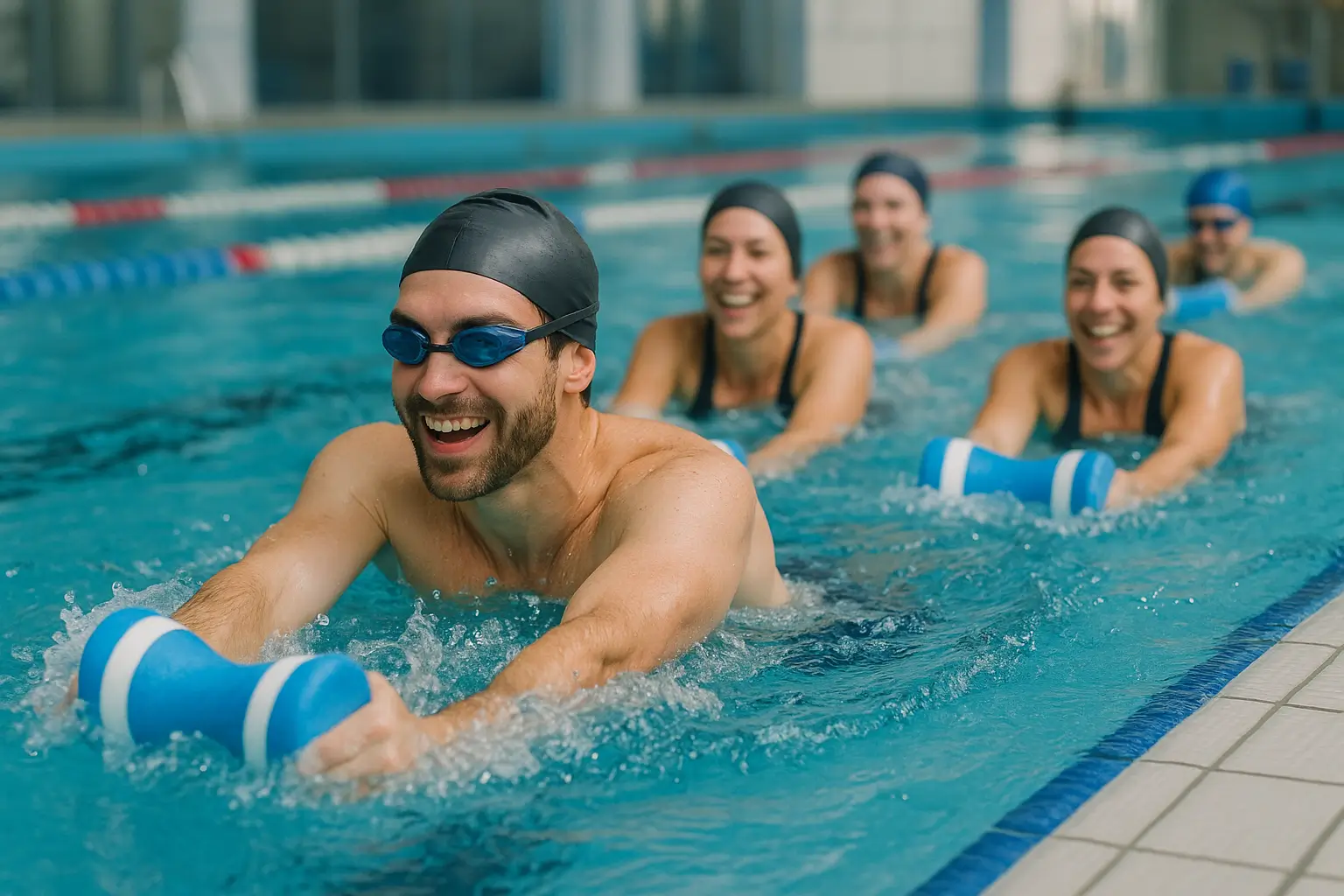
Physical training: in-pool programming
— Warm-up and cool-down
— 10–15 min warm-up (easy swims, mobility), 5–10 min cool-down (easy laps, stretching).
— Sample session structure (45–60 min for school-aged children)
— Warm-up: 200 m easy (mix strokes)
— Drills: 4 × 50 m technique-focused (e.g., catch-up, single-arm)
— Main set: 8–12 × 50 m at moderate intensity with rest intervals
— Kick set: 6 × 25–50 m with board
— Cool-down: 100–200 m easy
— Progression
— Gradually increase distance and intensity; periodize training in 4–6 week blocks (technique, endurance, speed).
Dryland training (complements pool work)
— Goals: build core stability, strength, mobility, and injury prevention.
— Basic dryland routine (20–30 min, 2–3× per week)
— Dynamic warm-up: leg swings, arm circles, hip openers (5 min)
— Core circuit: planks (3 × 30–60 s), side planks, dead bugs (10–15 min)
— Strength: bodyweight squats, lunges, pull-ups/rows, push-ups (3 sets of 8–12)
— Mobility & flexibility: thoracic rotations, shoulder band work, ankle mobility (5–10 min)
— Age and load
— For younger children, keep it playful and focus on movement quality. For teens, introduce load progressively under supervision.
Choosing a swim program in Moscow
— Options: municipal pools, private swim schools, sports schools (ДЮСШ), and club programs.
— What to check
— Coach qualifications and child-to-coach ratio.
— Pool hygiene and water temperature.
— Class structure, progression plan, and parent observation policy.
— Safety measures and emergency procedures.
— Reviews and trial lessons.
— Scheduling tips
— After-school slots are popular—book early. Consider morning swim for improved discipline and concentration.