Introduction
Swimming is both a life-saving skill and a powerful engine for physical and cognitive development. In Moscow—where indoor pools, rivers, reservoirs and seasonal ice all shape how families approach water—structured swimming education helps children grow healthier, more confident and safer around water. This article covers practical swimming techniques, how sports support child development, essential water-safety practices for Moscow conditions, and effective physical training inside and outside the pool.
Why swimming matters for children
— Physical development: builds cardiovascular fitness, muscle strength (especially core and shoulders), coordination and flexibility.
— Cognitive and emotional benefits: improved attention, stress reduction, better sleep, confidence and social skills through team practice.
— Long-term health: establishes habits for lifelong physical activity and supports healthy weight management.
— Safety: formal swimming instruction significantly reduces drowning risk when combined with supervision and water-safety education.
Age-appropriate learning stages
— Parent & baby (0–2 years): water acclimation, submersion comfort, breath control—must be in warm pools and always adult-supervised.
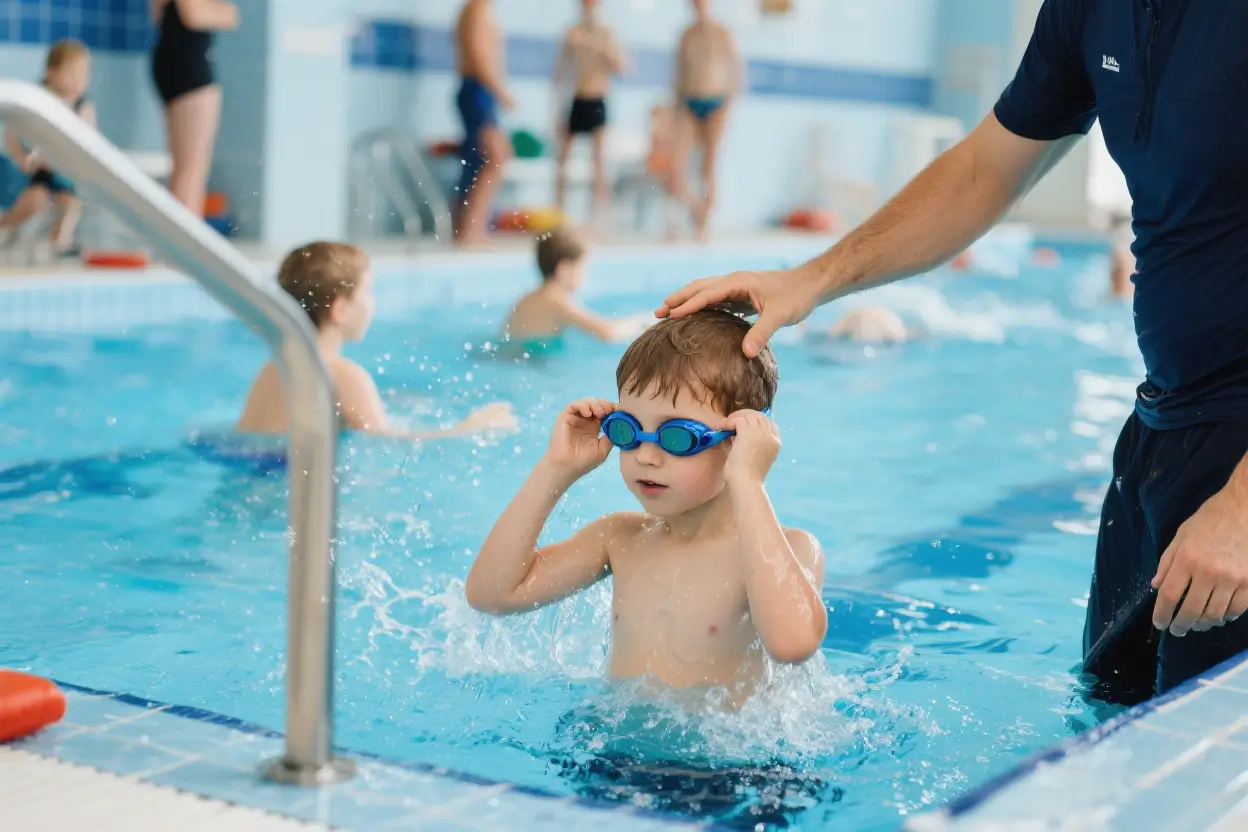
— Preschool (2–4 years): independence in the water, basic floating, kicking, whole-arm movements; learning through games.
— Early school age (5–7 years): stroke basics (freestyle and backstroke), breathing patterns, safe entry/exit.
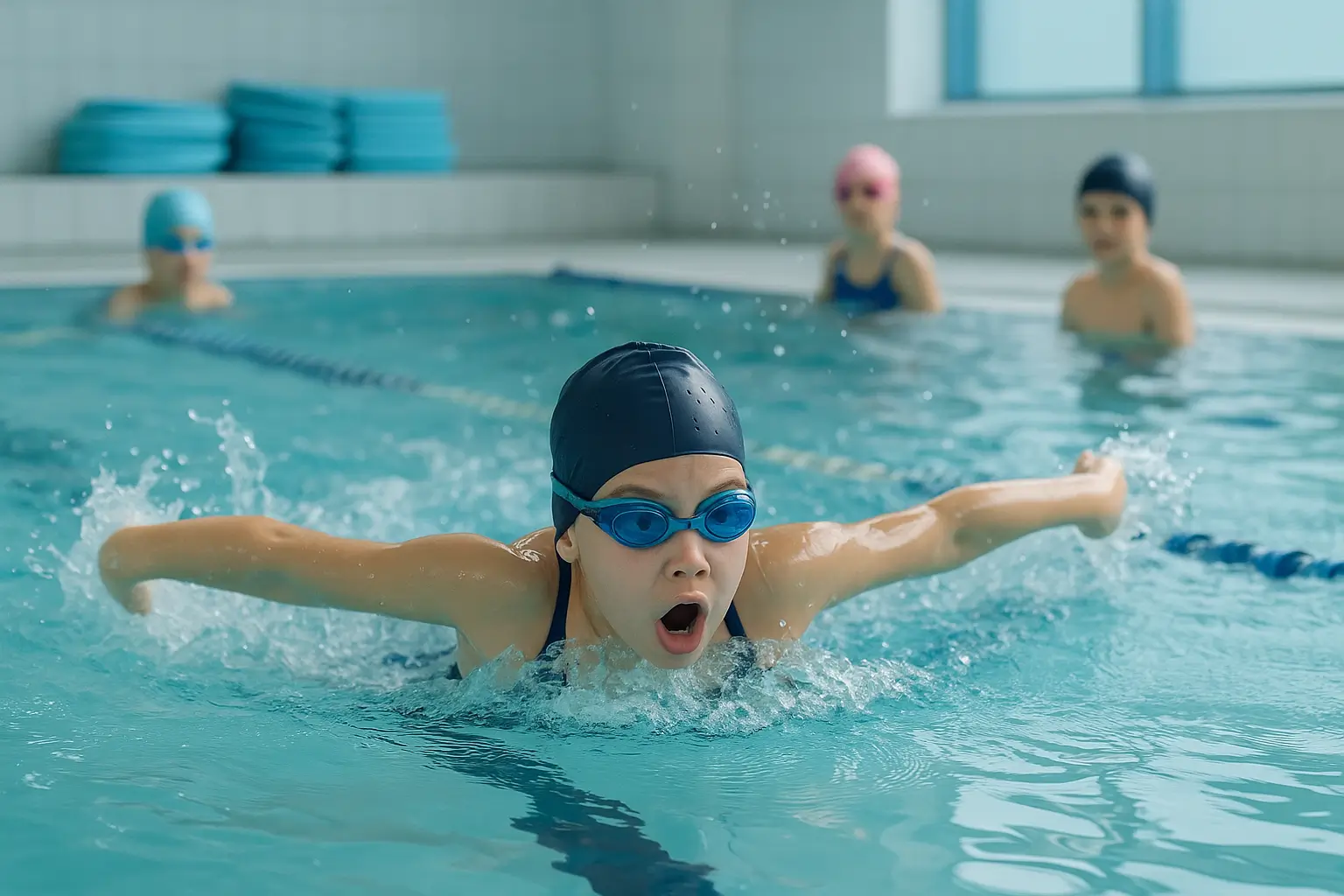
— School age (8+ years): stroke refinement (breaststroke, butterfly basics), turns, endurance work; introduction to competition if desired.
Choosing a pool or swim school in Moscow
Look for:
— Qualified coaches (certified in swimming instruction and child first aid).
— Healthy water and hygiene standards; clear ventilation in indoor pools.
— Appropriate water temperature: warmer pools for babies and toddlers (around 31–33°C for infants; for older children 28–30°C is common).
— Group sizes and coach-to-child ratios suitable for age and level.
— Clear safety procedures, visible lifeguards and emergency equipment.
— Positive reviews and transparent pricing; trial lessons before commitment.
Core techniques and how to teach them
Focus on fundamentals first: body position, breathing, balance, propulsion.
— Body position
— Aim for a horizontal, streamlined posture.
— Head in line with spine; look down (freestyle) to reduce drag.
— Breathing
— Teach bilateral breathing for balance and rhythm—inhale quickly to the side, exhale underwater.
— For beginners: breathe every two strokes or as comfort allows.
— Legs and kicking
— Flutter kick for freestyle/backstroke: small, fast motions from the hips.
— Breaststroke kick: whip-like movement—teach separately from arm movement.
— Arm mechanics and propulsion
— Freestyle catch: early vertical forearm, high elbow during pull; finish with strong push past the hip.
— Backstroke: steady alternating arm entry and long underwater pull.
— Drills: catch-up drill, fingertip drag, single-arm swimming to isolate mechanics.
— Starts and turns (for older kids)
— Teach safe pool entries, streamline off the wall, and basic tumble turns when appropriate.
Practical drills for every lesson
— Kicking with a board: builds leg strength and rhythm.
— Sculling: improves feel for the water and hand positioning.
— Pull-buoy sets: focus on arm technique and upper-body strength.
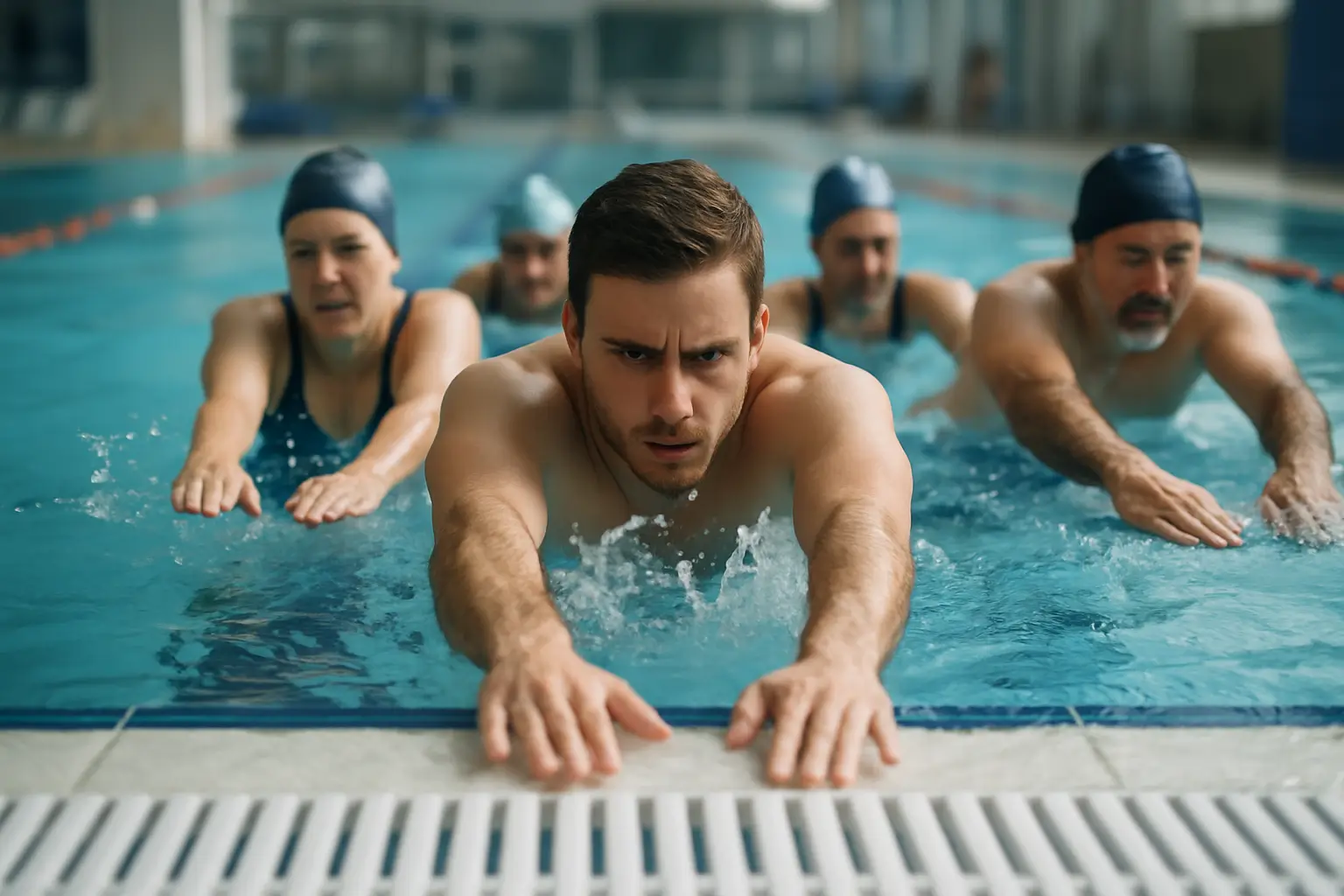
— Streamline glides: teach efficient off-the-wall position.
— Fun games: retrieve objects, relay races—keep motivation high for children.
Sample weekly plan (recreational swimmer, age 7–12)
— 2 sessions/week: Technique focus + fun drills (45–60 min)
— 1 session/week: Endurance and basic turns (45–60 min)
— Dryland 2×/week (20–30 min): mobility, core, and leg strength
For aspiring competitors: 4–6 pool sessions/week with progressive distance, interval training and race-pace sets; structured dryland and recovery.
Dryland training (outside the pool)
— Core stability: planks, side planks, dead-bugs.
— Mobility and flexibility: shoulder circles, thoracic rotations, ankle mobility.
— Strength (bodyweight and light resistance): squats, lunges, pull-ups/rows, hollow holds.
— Explosiveness: medicine-ball throws, short sprints for starts and turns.
— Breath control and lung capacity: controlled breath-hold drills under supervision (only with coach).
Injury prevention and recovery
— Warm up properly before each session, cool down and stretch after.
— Avoid sudden increases in training volume—follow the 10% weekly increase guideline as a general rule.
— Pay attention to shoulders: strengthen rotator cuff and scapular stabilizers.
— Rest and sleep are essential; when ill, shorten or skip sessions to avoid worsening symptoms.
Water safety—everyday rules (applies to Moscow indoor pools, rivers and reservoirs)
— Supervision: constant, attentive adult supervision for children near water.
— Barriers: teach children about fences, pool covers and restricted access at home.
— Life jackets: use approved personal flotation devices for boating or open water.
— Swim locations: use guarded pools and supervised beach areas where possible.
— Weather and seasonal risks:
— In summer, beware of strong currents and cold-water shock in rivers and reservoirs.
— In winter, never walk on frozen water bodies unless designated, tested and officially open for skating; Moscow’s river and reservoir ice thickness varies and can be dangerous.
— Learn and keep updated on local rules and posted warnings at the site.
Open-water guidance for Moscow (rivers, reservoirs, Gorky Park areas)
— Start open-water exposure only after strong pool skills are established.
— Swim with a buddy and preferably under lifeguard supervision.
— Wear bright swim caps or tow floats; check water quality advisories (Moscow authorities publish sanitary information).
— Be aware of currents, boat traffic and underwater hazards.
— Avoid swimming after heavy rains—runoff increases pollution and unpredictability.
Emergency preparedness
— Every parent, coach and pool staff should know basic life support: check responsiveness, call emergency services, begin rescue breaths and chest compressions as trained.
— In Moscow dial the emergency number for medical services (103 or unified 112) and notify pool staff/lifeguards immediately.
— Keep CPR and first-aid renewed with certified courses.
Motivating children and building long-term adherence
— Make lessons playful for younger kids—games, progress stickers and small goals work well.
— Celebrate small achievements and keep corrective feedback constructive.
— Balance structure and fun—avoid burnout by varying sessions and allowing rest.
— Encourage family swimming time to normalize water safety and reinforce skills.
Local resources and next steps in Moscow
— Look for municipal sports schools (детско-юношеская спортивная школа), accredited swim clubs and private swim schools with certified coaches.
— Ask facilities about water temperature, group sizes, coach credentials and emergency protocols before enrolling