Introduction
Swimming is more than a sport — it’s a life skill, a vehicle for physical and cognitive development, and in a city like Moscow, a year‑round opportunity thanks to indoor pools and structured programs. This guide explains core swimming techniques, how swimming supports child development, essential water‑safety practices (including Moscow‑specific considerations), and practical training both in the pool and on land.
Why swimming is ideal for child development
— *Whole‑body physical development*: swimming builds cardiovascular fitness, strength, coordination, balance and flexibility without heavy joint impact.
— *Motor skill and neurodevelopment*: repetitive, rhythmical motion and bilateral coordination promote motor planning, proprioception and neural connectivity.
— *Cognitive and emotional benefits*: learning skills, goal setting, following instructions and coping with challenge fosters concentration, confidence and resilience.
— *Social and behavioral gains*: group lessons teach turn‑taking, communication and teamwork.
— *Safety and independence*: early, quality instruction reduces drowning risk and increases water confidence.
General age guidance (typical):
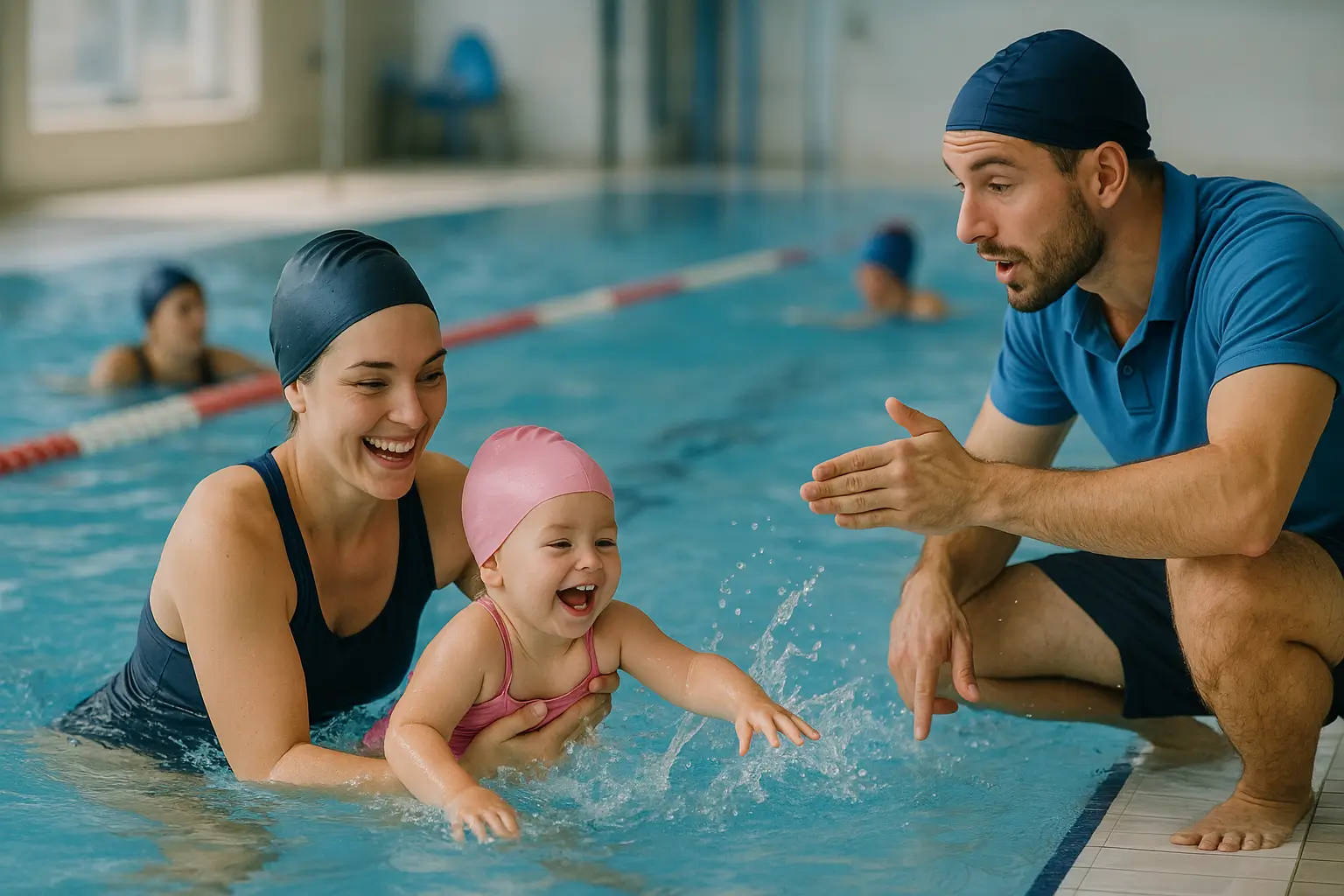
— Baby water acclimation classes: from ~3–6 months (parent+child, focus on comfort and basic water skills).
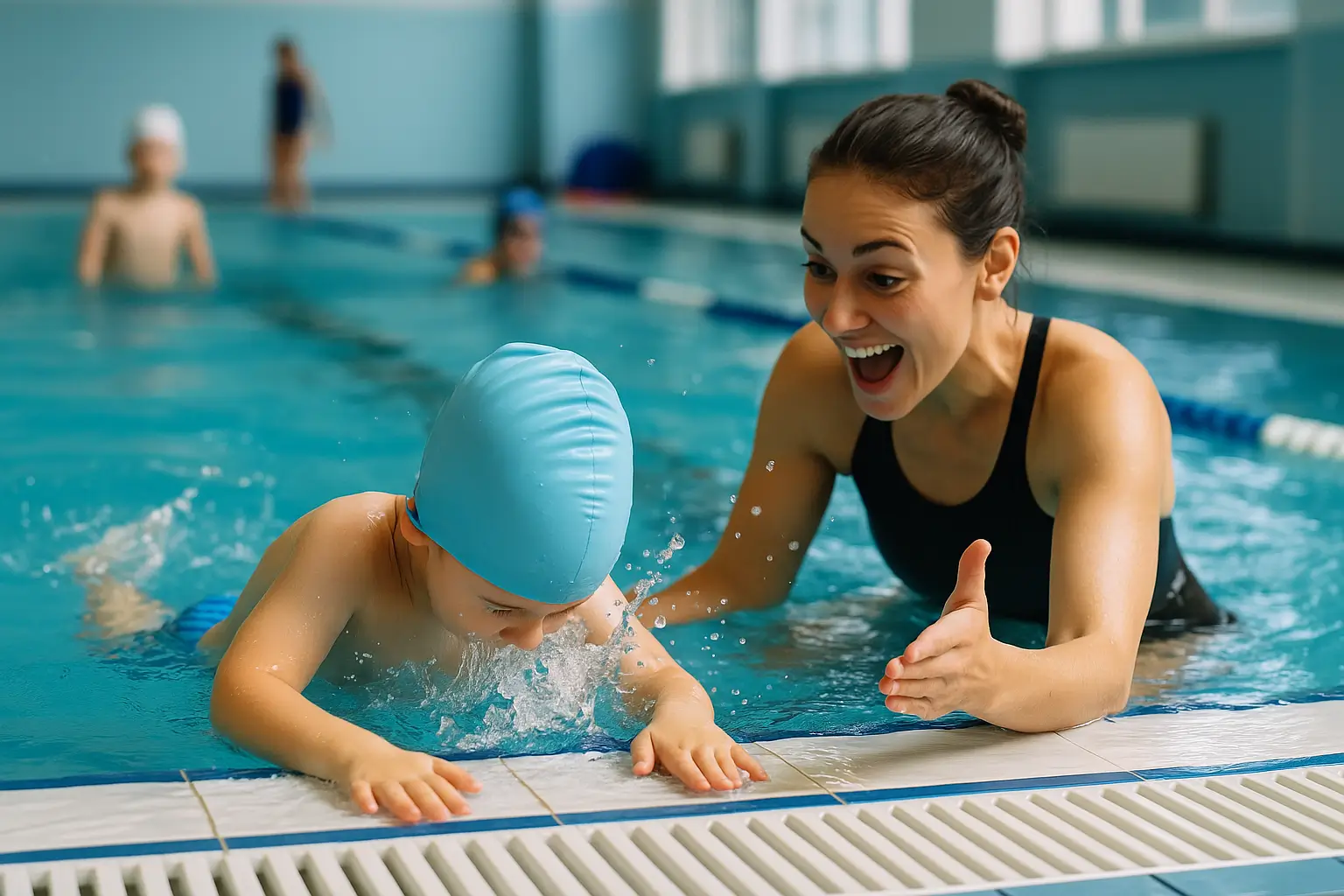
— Preschool lessons: ~3–5 years (basic strokes, floating, independent movement).
— School‑age children: 6+ (refine technique, introduce starts/turns, endurance).
— Competitive pathway: from ~7–8 onward for structured swim squads.
Core swimming techniques — fundamentals to teach and practice
Focus on body position, propulsion, breathing and rhythm.
— Body position
— Streamlined, horizontal alignment; neutral head position to reduce drag.
— Tight core, long torso and pointed toes.
— Freestyle (front crawl)
— High elbow catch, long pull through the water.
— Bilateral breathing when possible.
— Continuous flutter kick from the hips.
— Backstroke
— Neutral head, hips near surface, steady flutter kick.
— Straight arm recovery, strong pull matching entry.
— Breaststroke
— Glide phase important — push then pull/kick then glide.
— Symmetrical kick with feet turned outward; hands press forward then sweep.
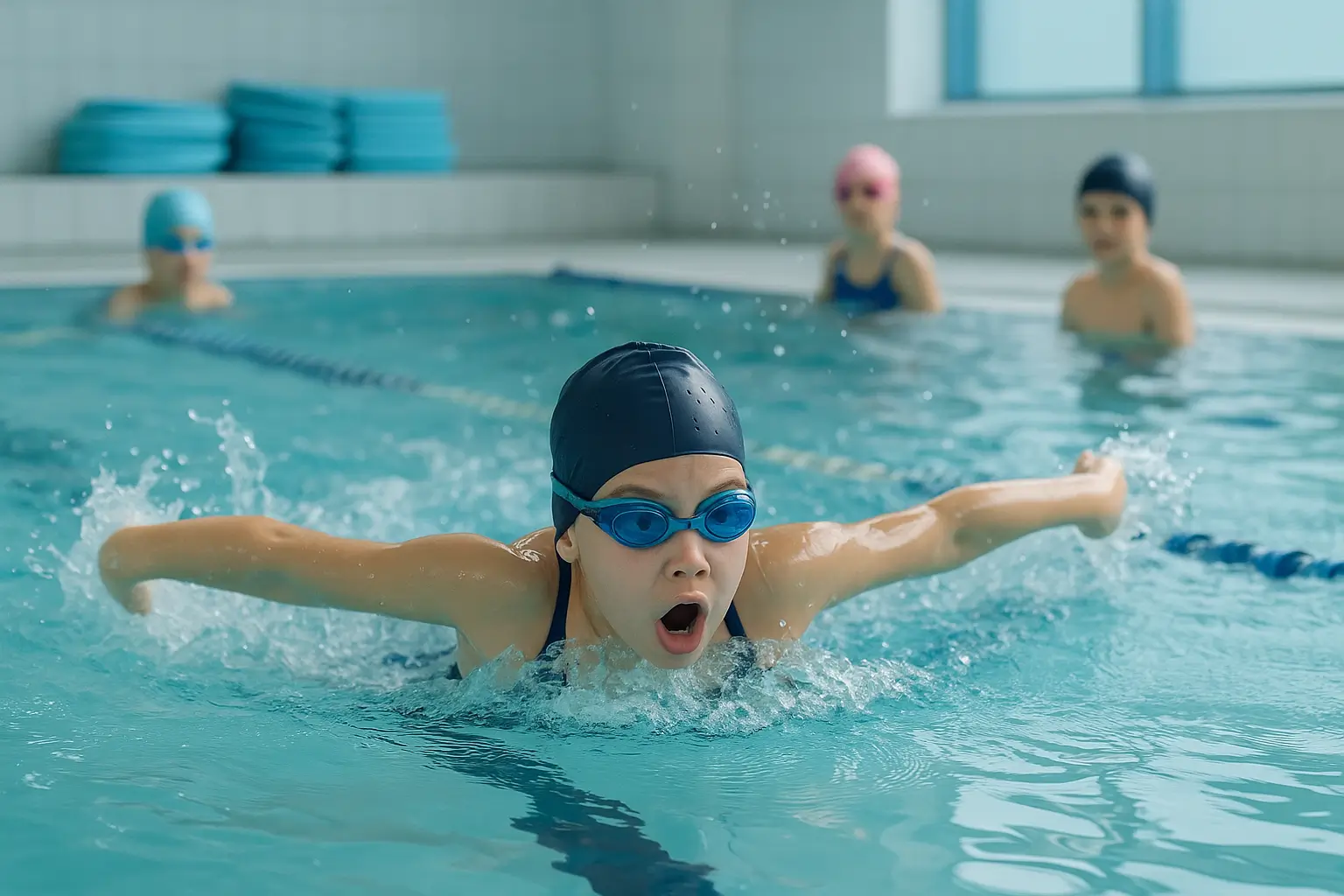
— Butterfly (advanced)
— Dolphin undulation driven by hips, simultaneous arm pull.
— Rhythm of two kicks per cycle for propulsion.
— Starts and turns
— Streamline off blocks/wall, strong underwater dolphin kicks (where allowed).
— Practice flip turns for freestyle/backstroke; open turns for breaststroke/butterfly.
Technique drills (examples)
— Catch‑up drill for freestyle (improves hand entry and balance).
— Single‑arm freestyle for better catch mechanics.
— Kickboard and vertical kicking for leg strength and balance.
— Sculling for feel of the water.
Safety on the water — essential practices for Moscow families
Swimming in Moscow offers many indoor pool options, but open‑water swimming (rivers, reservoirs, parks) is popular in summer. Safety must be central.
Pool safety (indoor pools, sports halls)
— Choose pools with certified lifeguards on duty, clear pool rules and accessible first aid.
— Check water temperature: for children, 29–31°C is comfortable for lessons; colder water may cause fatigue.
— Verify coach qualifications and child supervision ratios. Ask about certifications (Russian swimming federation, coaching diplomas, lifesaving training).
— Enforce basic rules: never run on the deck, no diving in shallow areas, always enter under adult supervision if young.
Open‑water safety (summer, parks, reservoirs)
— Swim only in designated, supervised areas with lifeguards. In Moscow, many city bathing areas are seasonal and regulated — use those approved by local authorities.
— Avoid swimming alone; follow the buddy principle.
— Respect depth, currents and underwater obstacles; visibility can be poor in rivers/reservoirs.
— Do not swim after heavy drinking or a large meal.
— Be extra cautious with cold water; sudden immersion can cause cold shock and incapacitation.
Winter and ice safety (Moscow winters)
— Never walk or skate on ice unless the spot is officially approved and tested by authorities.
— If you see someone fall through ice, call emergency services; do not attempt an untrained rescue. Use long ropes or poles if possible and stay low and anchored.
Teaching children to be safe
— Teach floatation and recovery skills (back float, treading water, roll to float).
— Practice simple self‑rescue: swim to the edge, climb out or signal for help.
— Make rules explicit and consistent: no unsupervised pool access, always inform an adult before going near water.
Training in the pool — structuring sessions for progress
Session structure
— Warm‑up: easy swim + drills (8–15 minutes).
— Technique work: focused drills (10–20 minutes).
— Main set: intervals for endurance/speed (15–30 minutes depending on age/level).
— Cool‑down: easy swimming and stretching (5–10 minutes).
Sample beginner youth session (30–40 min)
— Warm‑up: 4 x 25 m easy swim with 15s rest.
— Drills: 4 x 25 m catch‑up + 4 x 25 m kickboard flutter kick.
— Main: 6 x 25 m at moderate pace with 30s rest.
— Cool‑down: 2 x 25 m easy, plus stretching.
Intermediate youth session (45–60 min)
— Warm‑up: 200 m easy (mix strokes).
— Drills: 4 x 50 m focusing on technique (sculling, single arm, underwater kicks).
— Main set: 10 x 100 m with varied pace (aerobic and threshold work).
— Speed set: 8 x 25 m sprints with full recovery.
— Cool‑down: 200 m easy + mobility.
Progression principles
— Prioritize technique before increasing distance/speed.
— Use regular video feedback and coach corrections.
— Include rest and deload weeks to prevent burnout and injury.
Dryland training — exercises to complement pool work
Benefits: improved power, injury prevention, core stability, flexibility.
Basic dryland routine (20–30 min, 2–3×/week)
— Warm‑up: dynamic mobility (arm circles, leg swings) 5 min.
— Core: planks (3×30–60s), side planks (3×30s each).
— Strength: bodyweight