Introduction
Swimming is more than a sport—it’s a life skill that builds confidence, coordination, and health. In Moscow’s year‑round indoor facilities and seasonal open‑water spots, a structured swimming education program can safely guide children and adults from water acclimation to advanced technique and competitive fitness.
Why swimming matters in Moscow
— Moscow offers abundant indoor pools (basseyny) for year‑round practice and summer rivers/reservoirs for open‑water experience.
— Swimming improves cardiovascular health, motor development, posture, and mental resilience.
— It teaches water safety—especially important with Moscow’s rivers, reservoirs, and recreational beaches where conditions and regulations vary.
Choosing a swim school (how to evaluate in Moscow)
Ask these questions before enrolling:
— Credentials: Are instructors certified in swimming instruction, first aid, and lifeguarding? Look for experience with children and age‑appropriate curricula.
— Facility standards: Is the pool indoor, heated, and regularly maintained? What is the water temperature for kids’ classes (typically 27–30°C)?
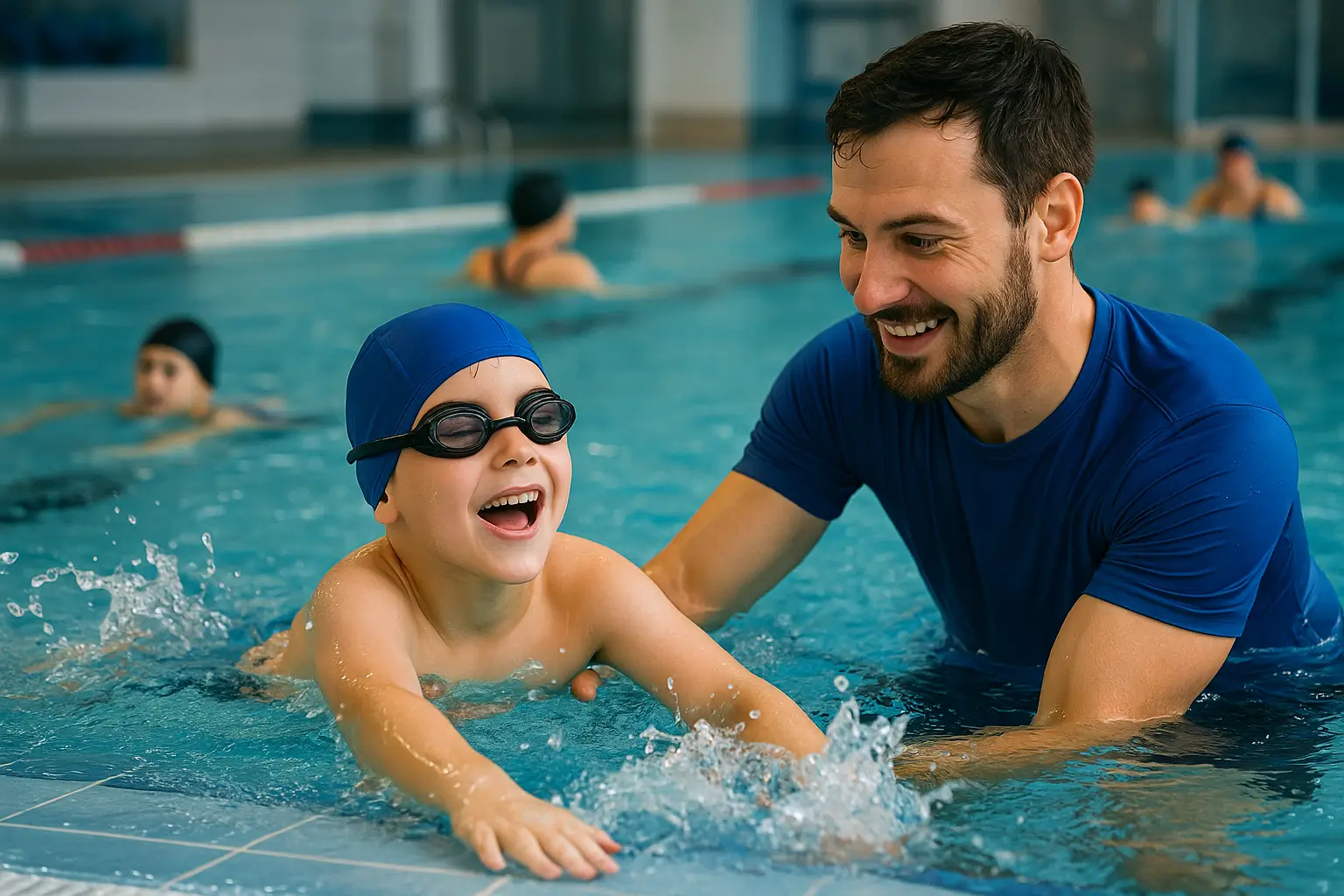
— Group size & ratio: Small groups or 1:1 lessons are best for young beginners. Ideal ratios: infants/toddlers 1:3–1:5; older kids 1:6–1:10.
— Safety & licensing: Is the pool part of a municipal or reputable private club (shkola plavaniya)? Are lifeguards on duty?
— Progress tracking: Does the school monitor progress and provide clear milestones or certificates?
— Location & schedule: Moscow traffic matters—choose a convenient pool to ensure consistency.
Age‑appropriate development stages
— Infants & toddlers (6 months–3 years)
— Focus: water acclimation, parent‑child bonding, breath control, buoyancy play.
— Sessions: short (20–30 min), lots of games, positive reinforcement.
— Preschool (3–6 years)
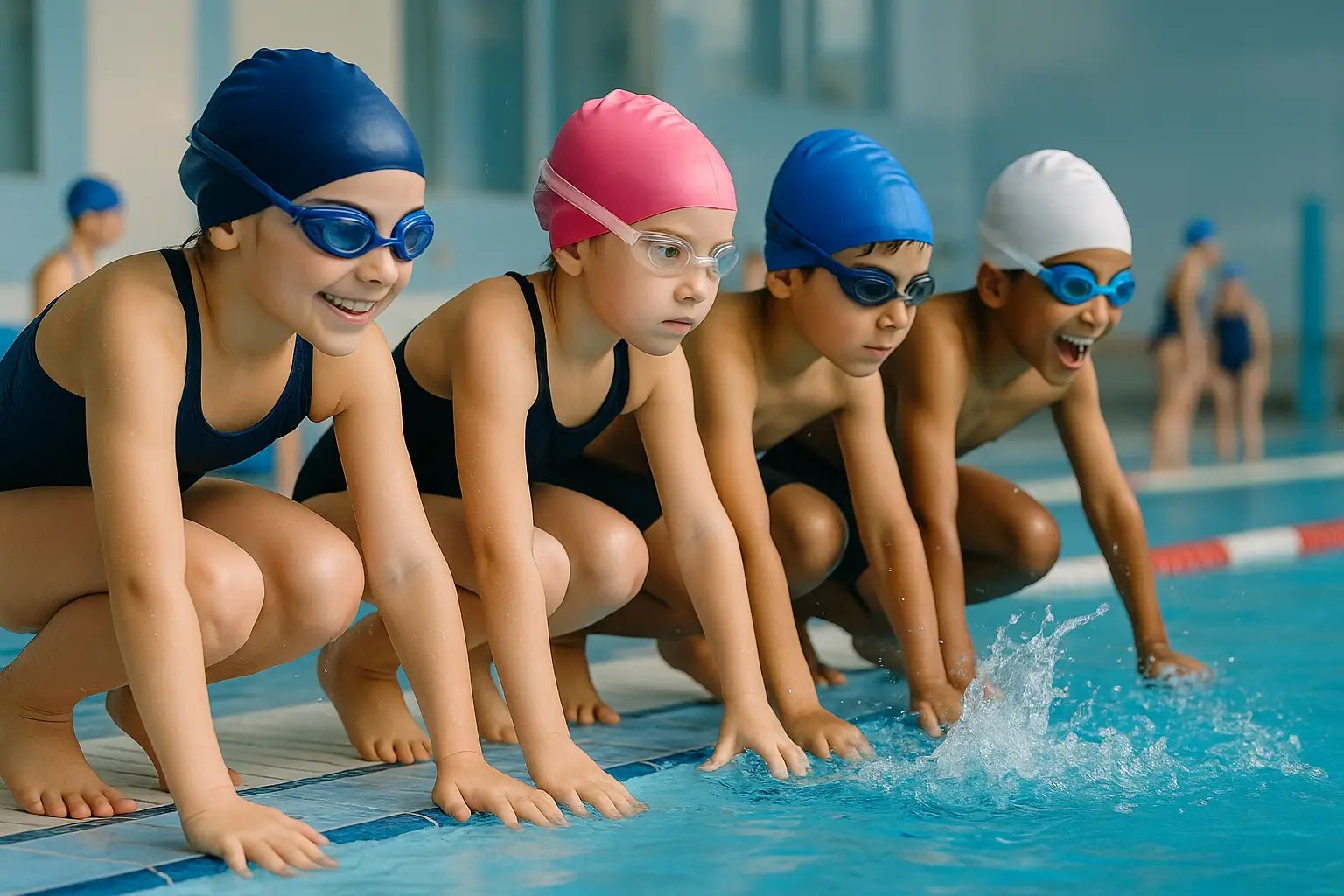
— Focus: independent floating, basic kicks, submersion, simple breath control, safe entries/exits.
— Sessions: 30–40 min, 2–3× weekly.
— School age (7–12 years)
— Focus: stroke technique (freestyle, backstroke, breaststroke), turns, underwater streamline, endurance.
— Sessions: 45–60 min, 2–5× weekly depending on goals.
— Teens & competitive swimmers (13+)
— Focus: advanced stroke mechanics, starts, turns, interval training, race strategy.
— Sessions: longer, structured sets, strength training out of water.
Core techniques & drills
— Freestyle (crawl)
— Fundamentals: strong streamline, steady bilateral or rhythmic breathing, high‑elbow recovery, consistent flutter kick.
— Drills: catch‑up drill, fingertip drag, 3‑stroke breathing, kickboard flutter sets.
— Backstroke
— Fundamentals: flat body alignment, rotate shoulders and hips, continuous flutter kick.
— Drills: single‑arm backstroke, 6‑kick switch, sculling on back.
— Breaststroke
— Fundamentals: timing of the kick and pull, whip kick, glide phase.
— Drills: pull‑kick‑glide progression, frog kick with board, scull for feel.
— Butterfly
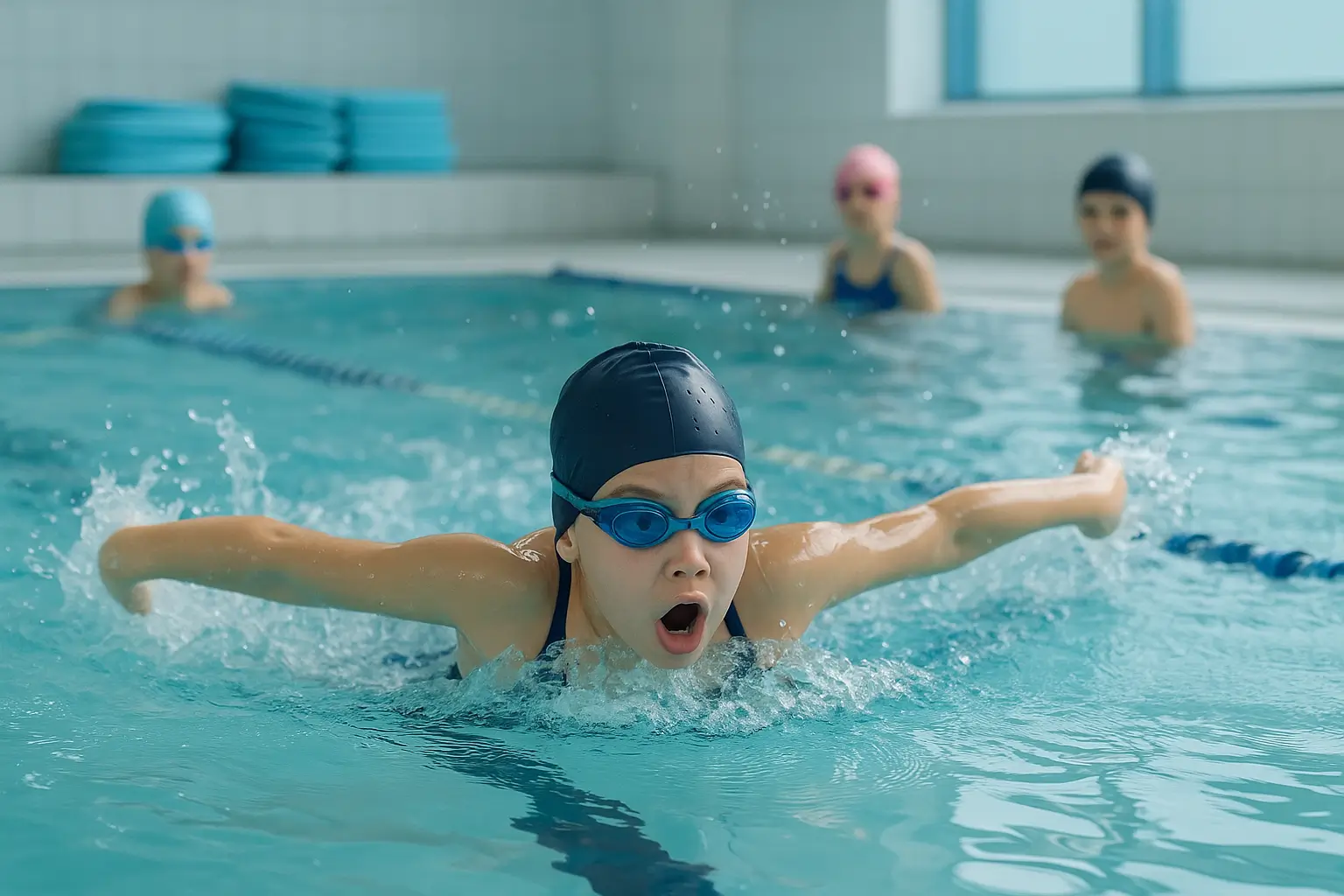
— Fundamentals: body undulation, simultaneous arm recovery, two‑kick rhythm.
— Drills: dolphin kick on board, single‑arm butterfly, 3‑3‑3 drill (3 strokes fly, 3 back, 3 freestyle).
— Breath control & underwater work
— Practice streamlines, dolphin kick off walls, gentle submersion games for kids.
Safety on and off the water
— Supervision: Never leave a child unattended near water. Enforce “touch‑supervision” for young children.
— Learn CPR and rescue skills: Parents and coaches should be trained in basic life support.
— Authorized areas only: In Moscow, swim in designated beaches or pools. Many waterbodies are off‑limits due to currents, water quality, or regulations.
— Open water precautions: Assess water quality, visibility, depth, currents (Moskva River, Moscow Reservoirs can be unpredictable). Use brightly colored swim caps, swim with a buddy, and avoid swimming alone.
— Personal flotation: For non‑swimmers, use approved life jackets—not inflatable toys—and transition to skill learning.
— Pool hygiene: Shower before entering, avoid swimming with open wounds, and follow pool rules.
Dryland training (outside the pool)
Benefits: builds strength, prevents injury, improves power and flexibility.
— Core & posture: planks, dead bugs, Russian twists.
— Mobility: shoulder circles, thoracic rotations, ankle mobility.
— Strength: bodyweight squats, lunges, pull‑ups or rows, push‑ups.
— Power & conditioning: medicine‑ball throws, short sprints, jump rope.
Sample weekly add‑on for school‑age swimmers:
— 2× short strength sessions (20–30 min)
— 2× mobility/flexibility sessions (15–20 min)
— 1× aerobic conditioning (cycling, running, or rowing 20–40 min)
Equipment checklist
— Swimwear: tight‑fitting training suit for older kids; snug swimsuit for young children.
— Goggles: anti‑fog, comfortable fit.
— Swim cap: helps with hygiene and visibility.
— Training aids: kickboard, pull‑buoy, snorkel, fins—used progressively under coach guidance.
— Safety: approved life jacket for open water, bright swim cap.
Coaching & parenting tips
— Emphasize fun and gradual progress—avoid pressure on very young children.
— Set short‑term, measurable goals (float 10 sec, swim 5 m unassisted).
— Positive reinforcement: celebrate effort and technique, not only speed.
— Consistency over intensity: regular short sessions beat sporadic long ones.
— Communicate with instructors: request videos or