Introduction
Swimming is more than a life skill — it’s a vehicle for physical fitness, emotional resilience, and social development. In Moscow’s mix of indoor pools and seasonal open water, quality swimming education combines technique, safety, and off‑pool physical training. This guide gives parents, coaches, and caregivers a practical roadmap: what to teach, how children progress, how to train safely, and how to adapt programs to Moscow’s environment.
Why swimming matters for children
— Improves cardiovascular fitness, coordination, balance, and posture.
— Builds confidence, discipline, goal-setting, and teamwork.
— Reduces risk of drowning when combined with water-safety education.
— Offers year-round activity options in Moscow: indoor pools in winter, supervised outdoor swimming in summer.
Water safety in Moscow — practical local considerations
— Supervision is essential: never leave children unattended near water (pools, rivers, ponds).
— Respect seasonal hazards: Moscow River currents, uneven riverbeds, water quality advisories, and cold temperatures in shoulder seasons. Check official city bathing advisories during summer.
— Open water rules: swim only in designated, lifeguarded areas; be cautious of algae, submerged objects, and uneven depths.
— Ice safety: never attempt open‑water swimming where ice conditions are uncertain. Cold water shock and thin ice are life‑threatening.
— Teach basic survival skills early: floating on back, treading water, controlled breathing, and how to exit a pool or climb onto a shallow bank.
Age-by-age learning path (recommended milestones)
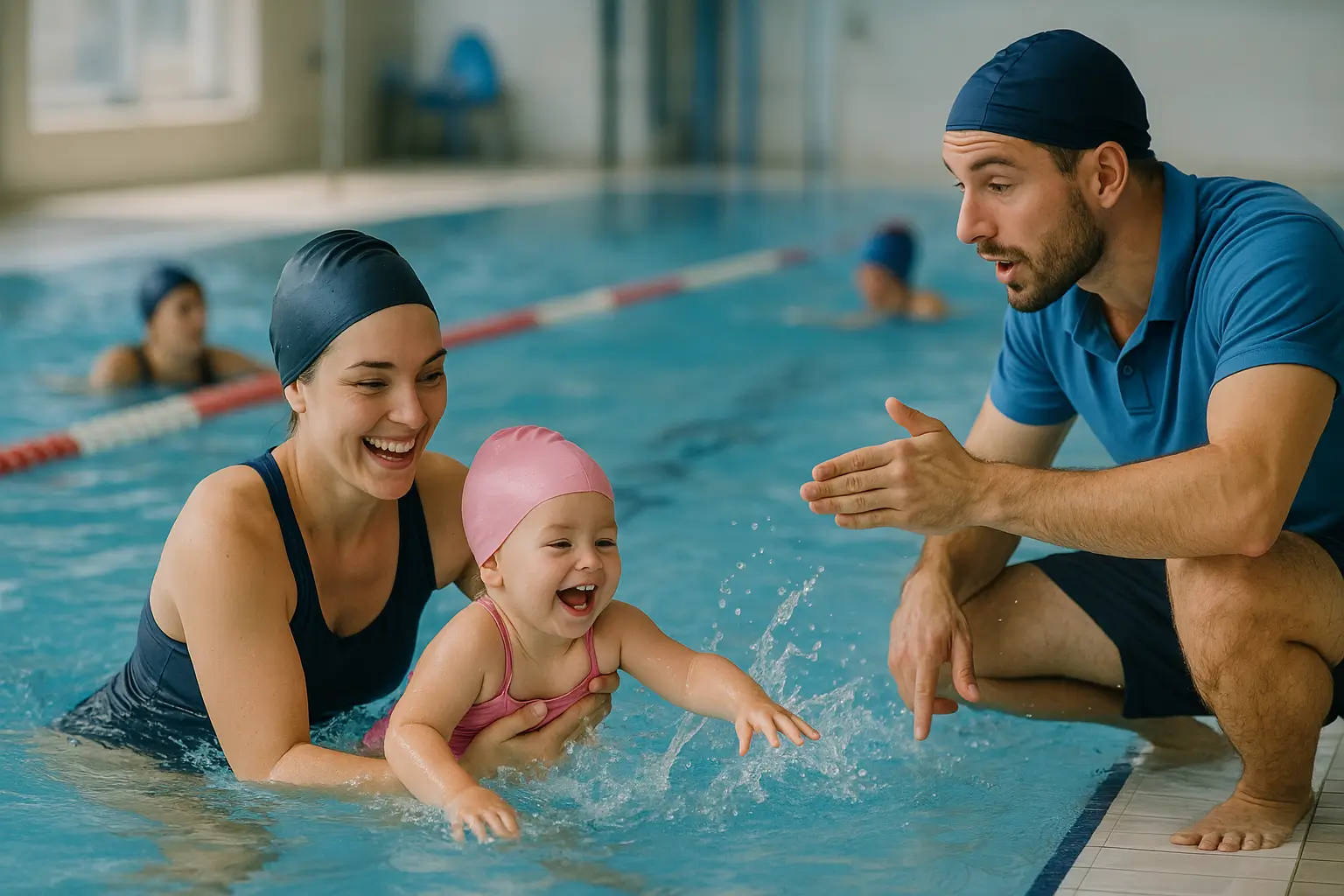
— 6–24 months (with caregiver): water familiarity, breath control, gentle submersion, supported floating. Focus on comfort and trust.
— 2–4 years: independent aquatic skills—kicking, blowing bubbles, floating with support, simple glides. Short, playful sessions (15–30 min).
— 5–7 years: coordinated front and back floats, beginner freestyle and backstroke kicks, safe entries/exits, basic survival float. Sessions 30–45 min.
— 8–12 years: refinement of strokes (freestyle, backstroke, introduction to breaststroke), flip turns basics, endurance building, introduction to technique drills.
— Teens: advanced stroke mechanics (breaststroke and butterfly), speed and endurance sets, strength and dryland training, race skills and tactics.
Core techniques — foundations to teach and drill
Emphasize fundamentals before speed: body position, balance, breathing, and efficient propulsion.
— Freestyle:
— Body: horizontal, head neutral, streamline on catch.
— Kick: compact flutter kick from hips with relaxed ankles.
— Breathing: bilateral breathing practice; exhale underwater steadily.
— Drill ideas: catch‑up, fingertip drag, breathing every 3 strokes.
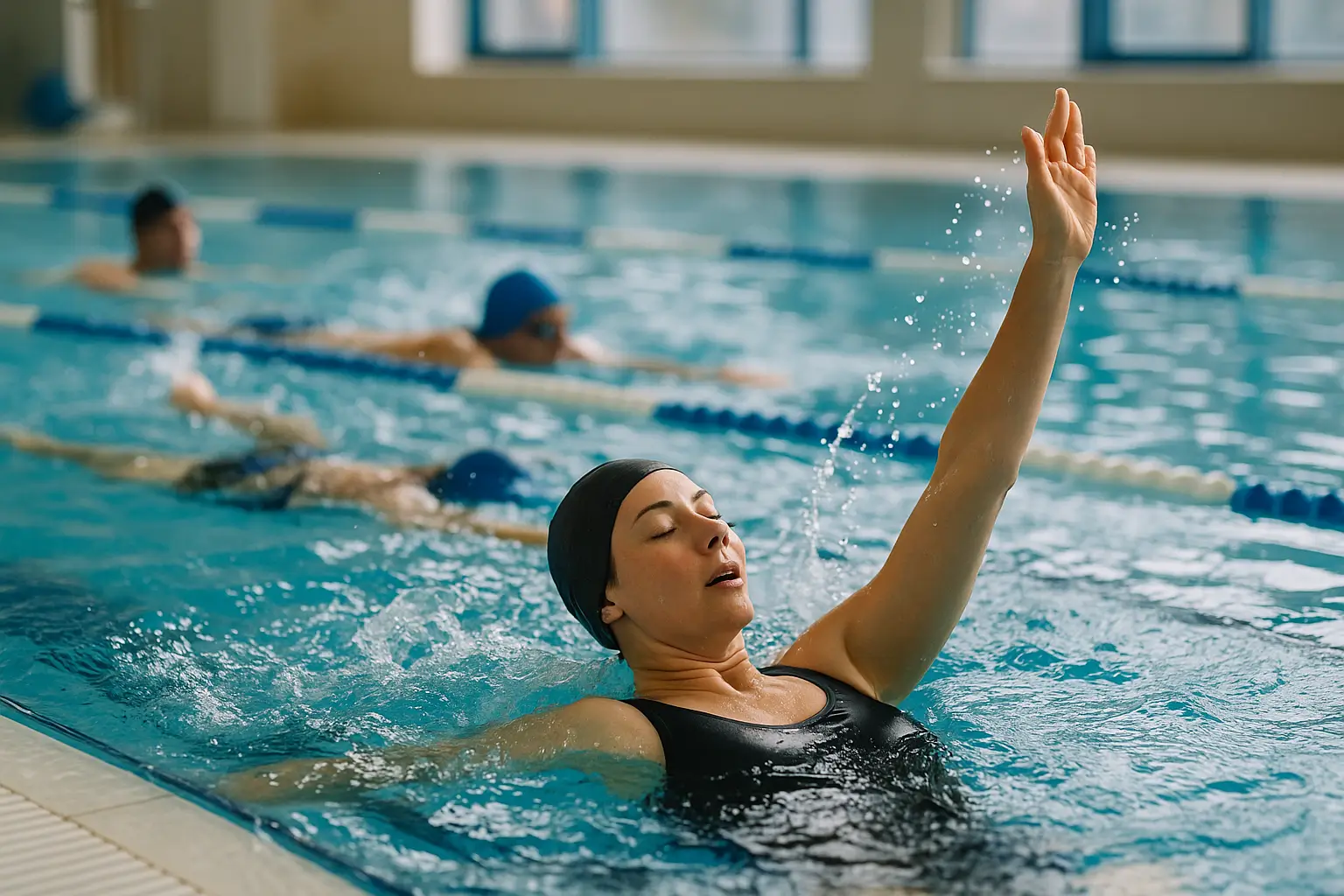
— Backstroke:
— Body: flat on back, hips high, head neutral.
— Arms: straight arm recovery, strong catch under the water.
— Kick: steady flutter kick; practice body rotation.
— Drill ideas: single-arm backstroke, dead-man float then resume.
— Breaststroke:
— Timing: pull-breathe-kick-glide rhythm is essential.
— Kick: whip kick with knees close on recovery.
— Drill ideas: glide emphasis, pull with kick pause.
— Butterfly (intro):
— Body undulation and together kick.
— Start with body dolphin drills and two‑kick rhythm.
— Drill ideas: body dolphin on board, single-arm fly.
— Starts, turns, and finishes:
— Teach safe starts and strong streamlines.
— Practice open turns, then progress to flip turns for freestyle/backstroke.
— Emphasize pushing off in a tight streamline.
Safety and teaching methods
— Positive reinforcement, short progressions, and consistent repetition.
— Use games for young children to build skills without pressure.
— Gradual exposure: let comfort precede technique intensity.
— Class ratios: prioritize low child-to-instructor ratios for beginners.
— Certification: look for coaches with recognized credentials and first-aid/CPR training.
Training: in-pool programming
Design sessions around warm-up, technique, main set, and cool-down.
— Beginner session (30–40 min):
— Warm-up: 5–8 min easy kicking and bodyline drills.
— Technique: 10–12 min focused drill (e.g., freestyle breathing drills).
— Main: 10–12 min short intervals (25–50 m) with rest.
— Cool-down: 3–5 min easy swimming + stretch.
— Intermediate session (45–60 min):
— Warm-up + dynamic mobility.
— Technique drills across strokes (15–20 min).
— Main set: mixed intervals building speed and endurance (e.g., 8×50 m, sets of 100–200 m).
— Sprint work and starts/turns practice.
— Cool-down + stretching.
Dryland (out of pool) training — what to include
— Mobility: shoulder circles, thoracic rotation, ankle flexibility.
— Core stability: planks, dead bugs, bird dogs—focus on posture for streamlined swimming.
— Strength: bodyweight and light resistance—push-ups, pull-ups, squats, resisted band rows.
— Plyometrics for older kids: jumps and medicine-ball throws for power.
— Breath control and relaxation exercises: breathing drills, controlled exhale practice.
— Frequency: 2–3 short dryland sessions per week for school-age swimmers; adjust intensity for age.
Sample weekly plan (for school-age recreational swimmer)
— Monday: Technique-focused pool (45 min) + 15 min dryland core.
— Wednesday: Endurance pool session (45–60 min).
— Friday: Speed/tech session (45 min) + starts/turns practice.
— Weekend: Family open-water swim in supervised area (summer) or fun aquatic play.
Equipment and pool etiquette
— Essential gear: well-fitting swimsuit, goggles, cap (for lessons), towel, water bottle.
— Optional: pull buoy, kickboard, hand paddles (use sparingly for technique), snorkel for stroke focus.
— Etiquette: follow lane rules, respect lane speeds, arrive warmed up, avoid distracting devices poolside.
Competition, pathways and motivation in Moscow
— Local sports schools (детско‑юношеские спортивные школы) and private clubs offer progression from recreational to competitive programs.
— Competitions build goal-setting and social skills; start with local meets once technique and turns are solid.
— Encourage a healthy balance between training and rest; prioritize long-term development over