Introduction
Swimming is both a lifesaving skill and a powerful tool for physical, cognitive and social development. In Moscow — where indoor pools are used year-round and summer open-water sites attract families to the Moskva River and reservoirs — reliable swimming education is essential. This article covers practical teaching methods, age-appropriate progressions, water-safety rules for pools and open water in Moscow, and complementary dryland training.
Why swimming matters for children
— Physical development: improved cardiovascular fitness, muscle tone, coordination and balance.
— Motor skills and neural development: rhythmic breathing and bilateral movement support motor planning and neural integration.
— Social and emotional: teamwork, goal setting, confidence, resilience and discipline.
— Lifesaving: reduced risk of drowning when taught appropriate skills and safety awareness.
Age-appropriate teaching approach
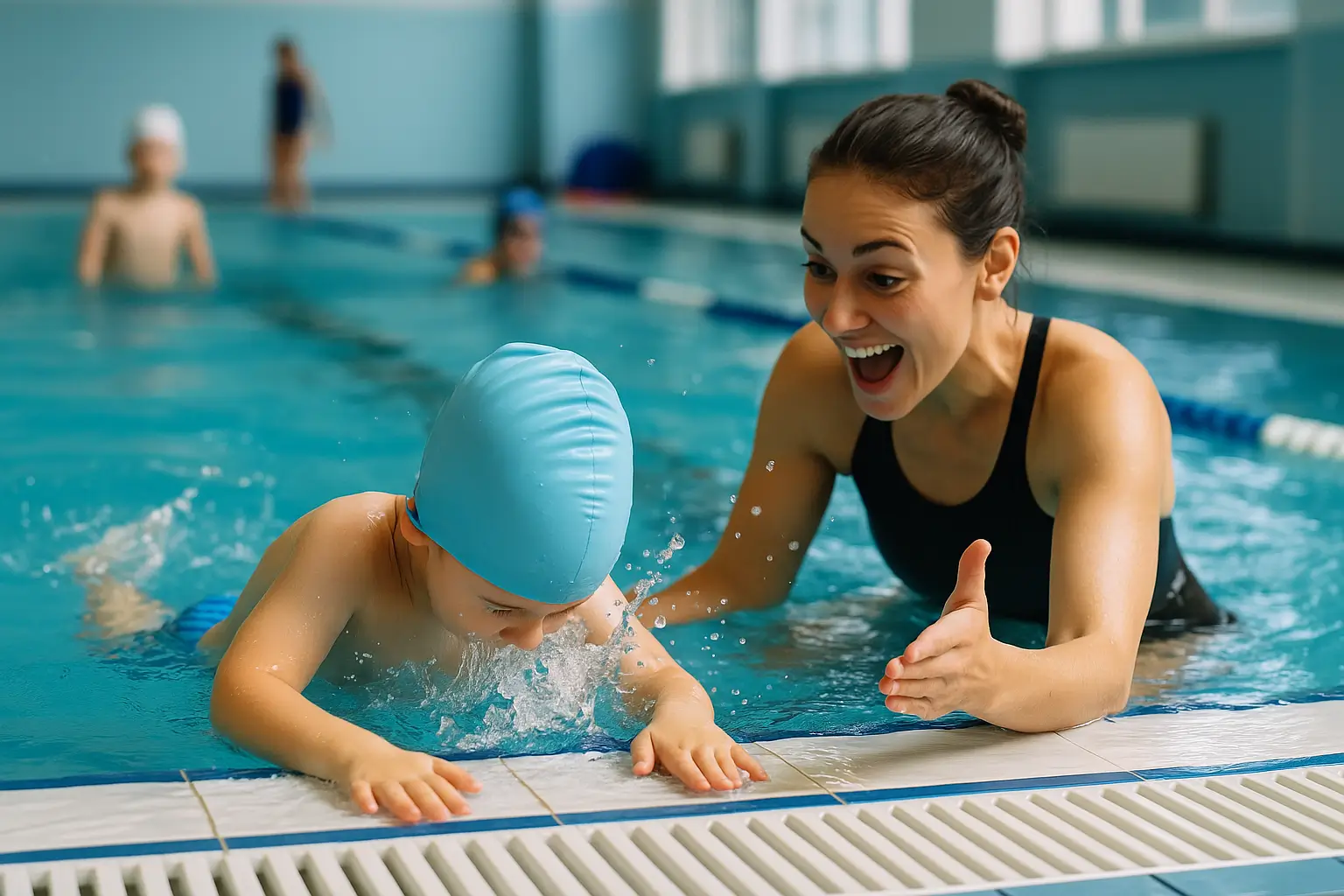
— 6–18 months (parent-and-child): focus on water comfort, buoyancy, gentle immersion, breath control and positive association. Short sessions (15–20 min).
— 1.5–3 years (toddlers): independent submersion attempts, floating with support, simple kicks, games to build trust and motor patterns. Sessions 20–30 min.
— 4–5 years (pre-school): teach basic breath control, floating independently, front and back glides, beginner kick technique; still game-based. Sessions 30–40 min.
— 6–12 years (school age): progress to coordinated strokes (freestyle, backstroke, breaststroke basics), turn practice, underwater skills, and safety/rescue awareness. Sessions 40–60 min.
— Teens & adults (beginners to advanced): stroke mechanics, interval training, endurance, strength and technique refinement.
Core technique elements (practical cues)
— Breathing: exhale slowly underwater, inhale quickly when head turns above water; use bilateral breathing drills for balance.
— Body position: long, horizontal body; hips at surface; look slightly forward-down for freestyle.
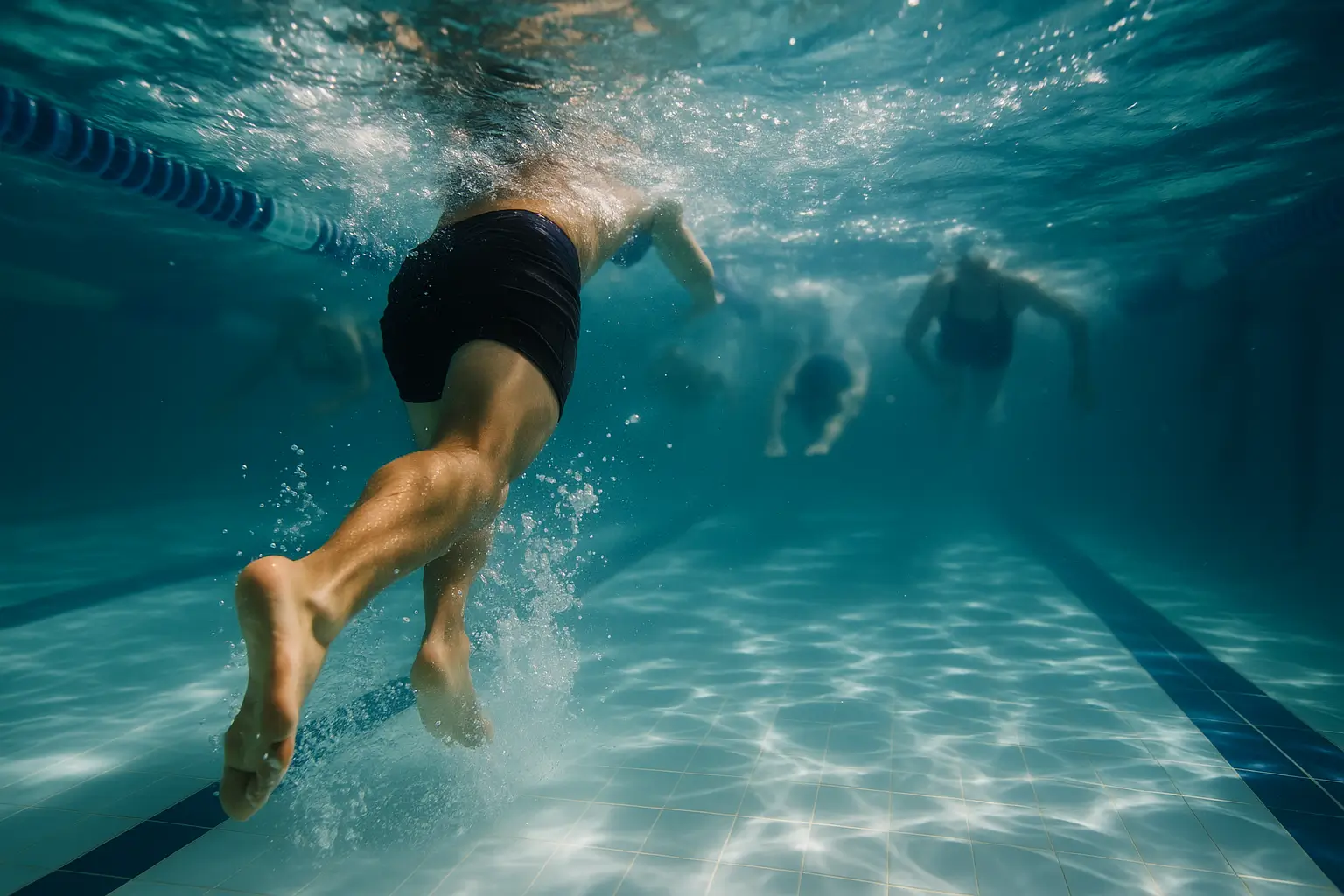
— Kicking: steady, ankle-flexible flutter kick from hips for freestyle/backstroke; short whip kick for breaststroke.
— Arm mechanics:
— Freestyle: high elbow recovery, early vertical forearm and strong catch-pull.
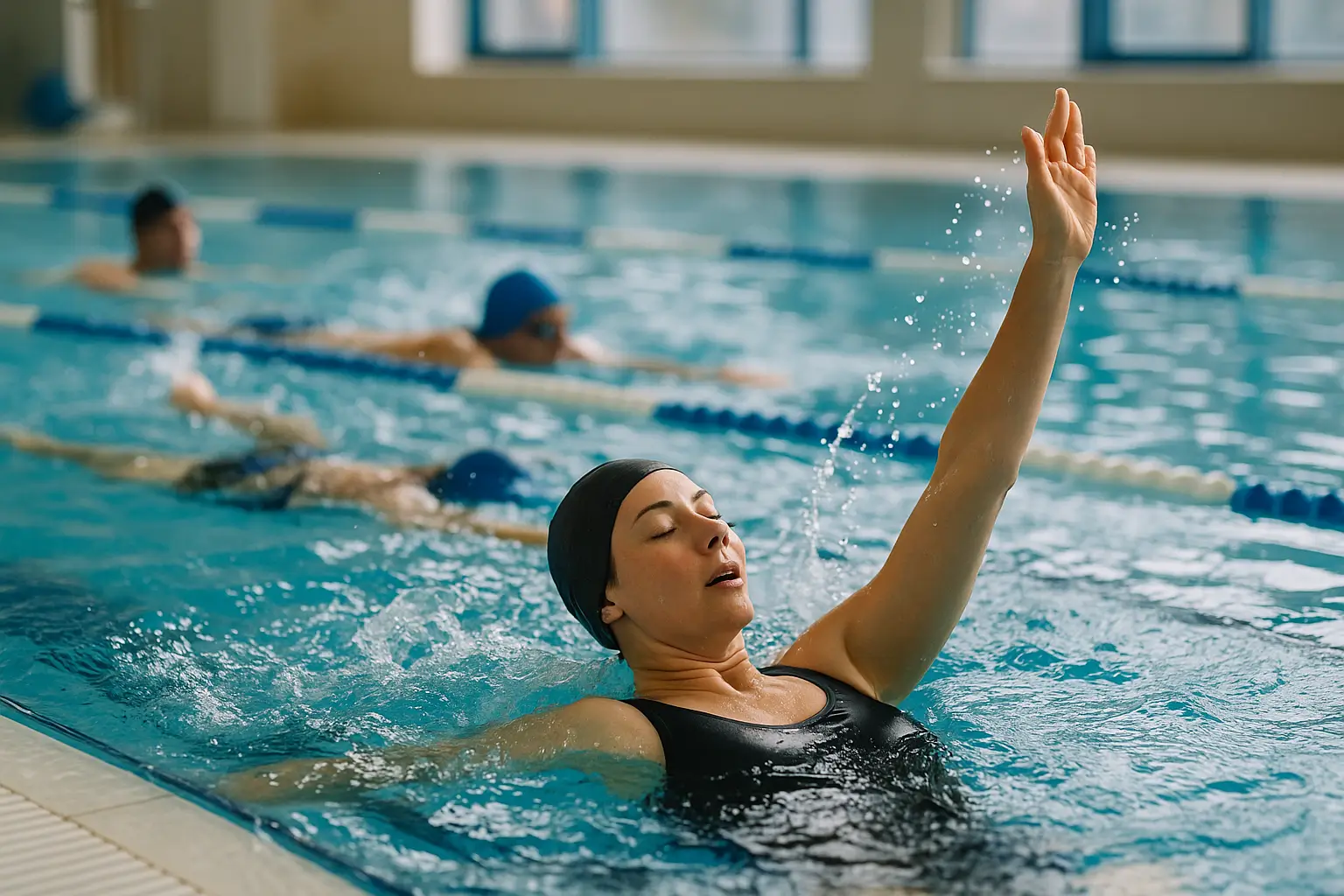
— Backstroke: reach long, rotate the body, steady hand entry.
— Breaststroke: symmetrical outsweep, insweep and glide.
— Streamline & push-off: tight streamline from the wall (hands over head, ears between arms) to maximize glide after turns and starts.
— Progressive learning: isolate skills (kicks with board, scull for feel, glides) before combining them.
Fun, effective drills for children
— Bubble blowing races — builds breath control.
— Star floats and log rolls — promote relaxed floating.
— Kick games with boards — strengthen legs and rhythm.
— Treasure hunt underwater — encourages submersion and comfort.
— 3–5 stroke challenge — encourage efficient short bursts, improving technique and attention span.
Training structure and sample weekly plan (school-age child)
— Frequency: 2–3 pool sessions/week for skill development; 3–5 for competitive progression.
— Sample week (non-competitive, 6–12 y.o.):
— Mon: Technique focus — drills for breathing and kick (45–50 min).
— Wed: Endurance/game play — intervals + fun relay races (45–50 min).
— Sat: Skills and safety — stroke introduction + water-safety practice (60 min).
— Warm-up: dynamic dryland (arm circles, leg swings), light swim (5–10 min).
— Cool-down: easy swim + stretching (5–10 min).
Dryland training (outside the pool)
— Purpose: improve strength, mobility, coordination and injury prevention.
— Simple exercises for children:
— Core: front planks (10–30s), dead bugs.
— Shoulders: light band external/internal rotations, scapular push-ups.
— Mobility: thoracic rotations, hip flexor stretches.
— Plyometrics/coordination: hopping, ladder drills, ball games.
— Adults/competitive swimmers: targeted strength training (pulling and core emphasis), mobility work and periodized dryland sessions