Swimming Education in Moscow: A Practical Guide for Parents, Coaches and Swimmers
Swimming is more than a sport — it’s a life skill that builds fitness, confidence and social development. This guide focuses on swim techniques, child development through sport, water safety, and physical training both in and out of the pool, with practical tips for families and coaches living in Moscow.
Why swimming matters for children and families
— Builds cardiovascular fitness, coordination and muscular balance.
— Enhances cognitive and social development: discipline, goal-setting, teamwork.
— Improves motor skills, posture and breathing control.
— Is a life-saving ability — crucial in a city with many indoor and open-water options.
When to start
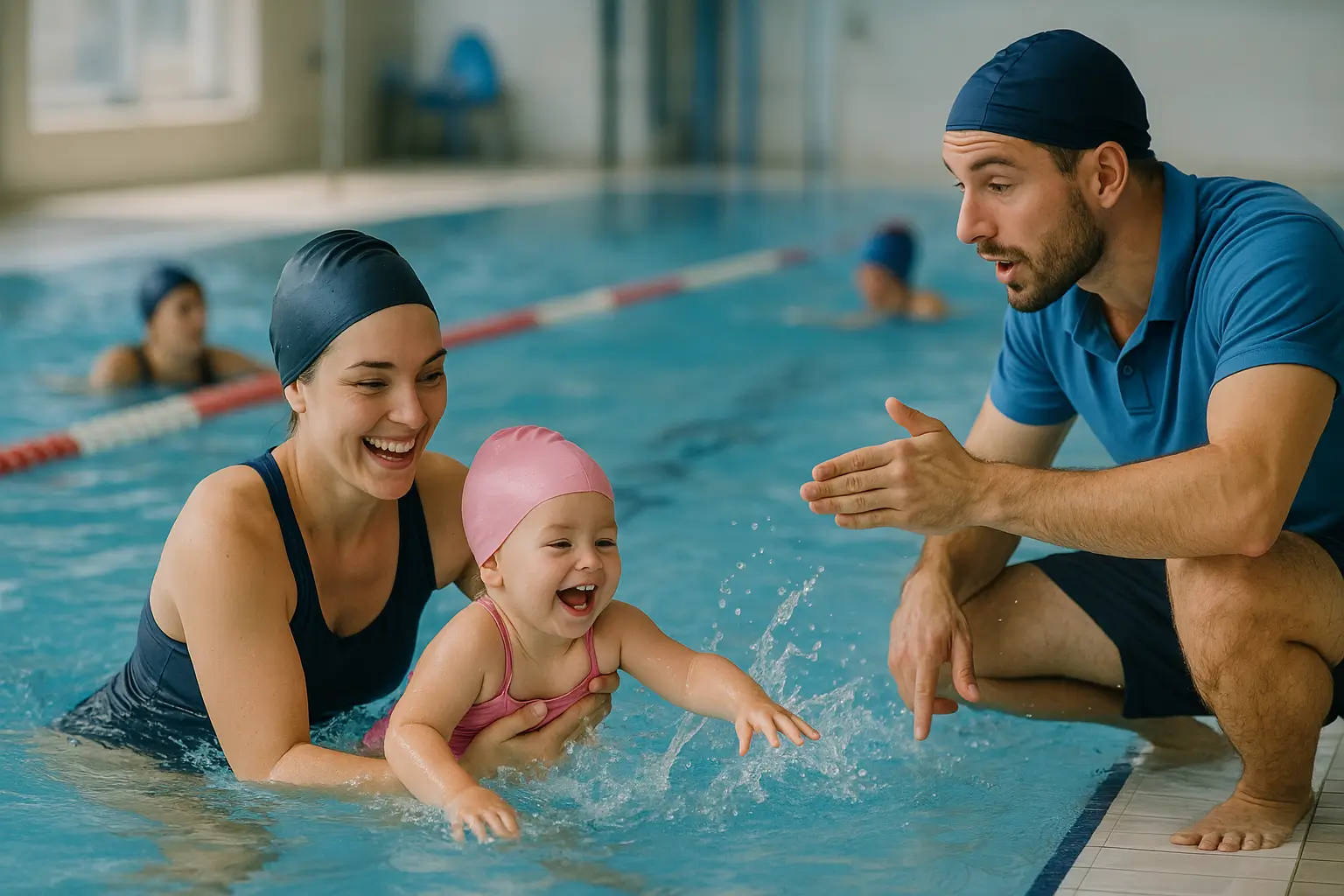
— Parent-and-child classes: commonly from about 4–6 months with an adult in the water. Always get your pediatrician’s OK.
— Independent lessons: many programs introduce basic skills around 3–4 years, with formal stroke development from 5–6 years onward.
— Progress depends on the child, lesson frequency, and quality of instruction — avoid rigid age expectations.
Choosing a swim school in Moscow
Look for:
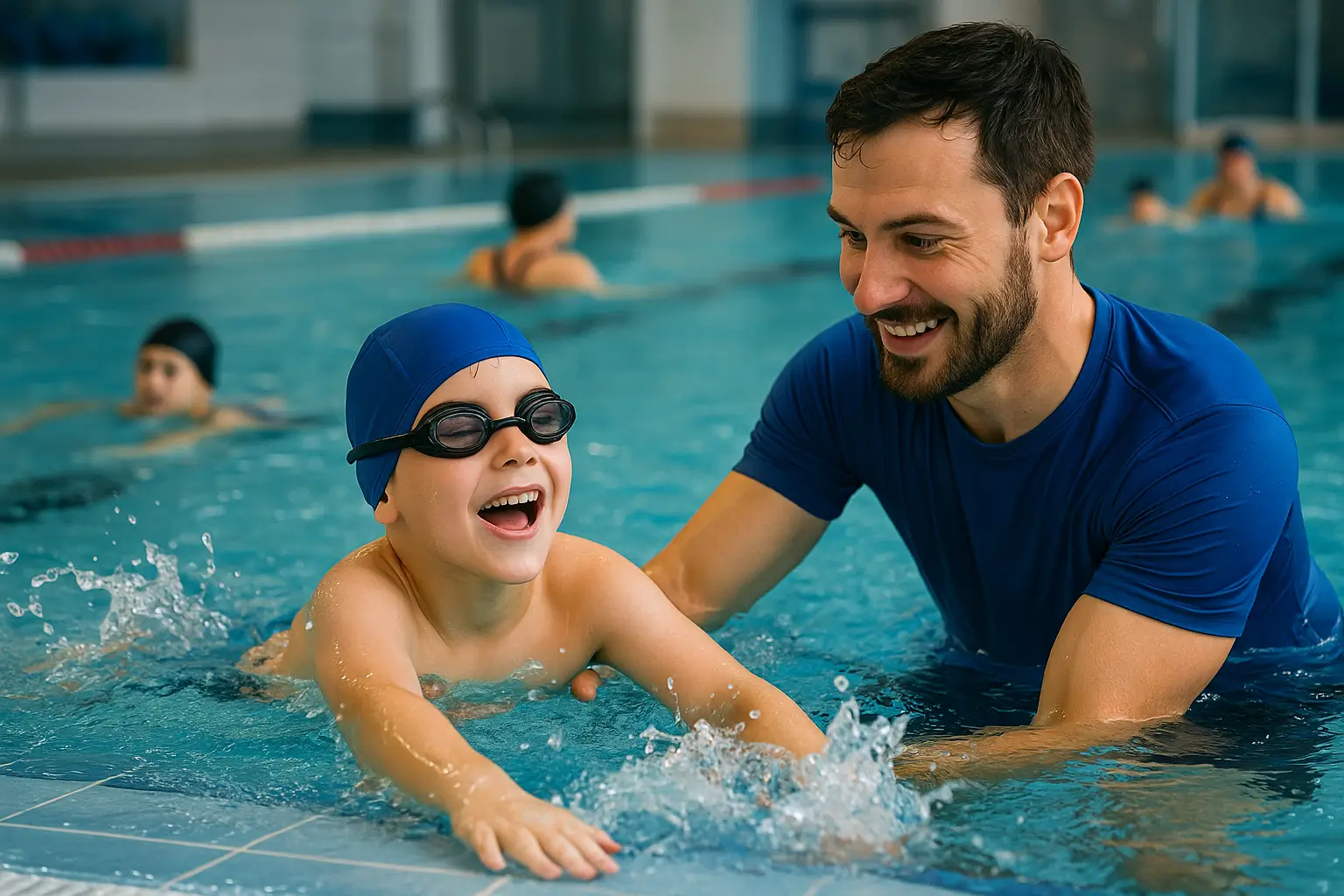
— Qualified coaches with certifications (swim teaching, lifeguard, first aid/CPR).
— Low coach-to-child ratio appropriate for age and level.
— Clean, well-maintained pools and visible water quality controls.
— Comfortable pool temperature (children’s teaching pools are usually kept warmer).
— Trial lessons, clear curriculum and progress reporting.
— Transparent safety policies (lifeguards on duty, emergency procedures).
— Good location and schedule convenience for your family.
Local options typically include municipal sports schools (DYuSSh), private swim clubs, community pools in sports complexes, and university pools — visit and observe lessons before enrolling.
Water safety — rules every parent and coach should enforce
— Never leave a child unattended near water, even for a moment; designate a responsible adult.
— Use appropriate flotation only as teaching aids, not as a replacement for supervision.
— Teach basic safety skills early: entering/exiting pool safely, floating, and calling for help.
— Check pool depth before jumping or diving; wait for lifeguard permission.
— For open water (rivers, lakes, reservoirs, the Moscow River): avoid unsupervised swimming and strong currents; swim only in designated safe areas with rescue services present.
— Know emergency numbers (general emergency services in Russia: 112).
— Parents and coaches should be trained in CPR and basic water-rescue procedures.
Core swim techniques and simple drills
Focus on technique, not speed. Key strokes and starter drills:
— Freestyle (front crawl)
— Key points: streamline body, relaxed high elbow pull, consistent bilateral or unilateral breathing.
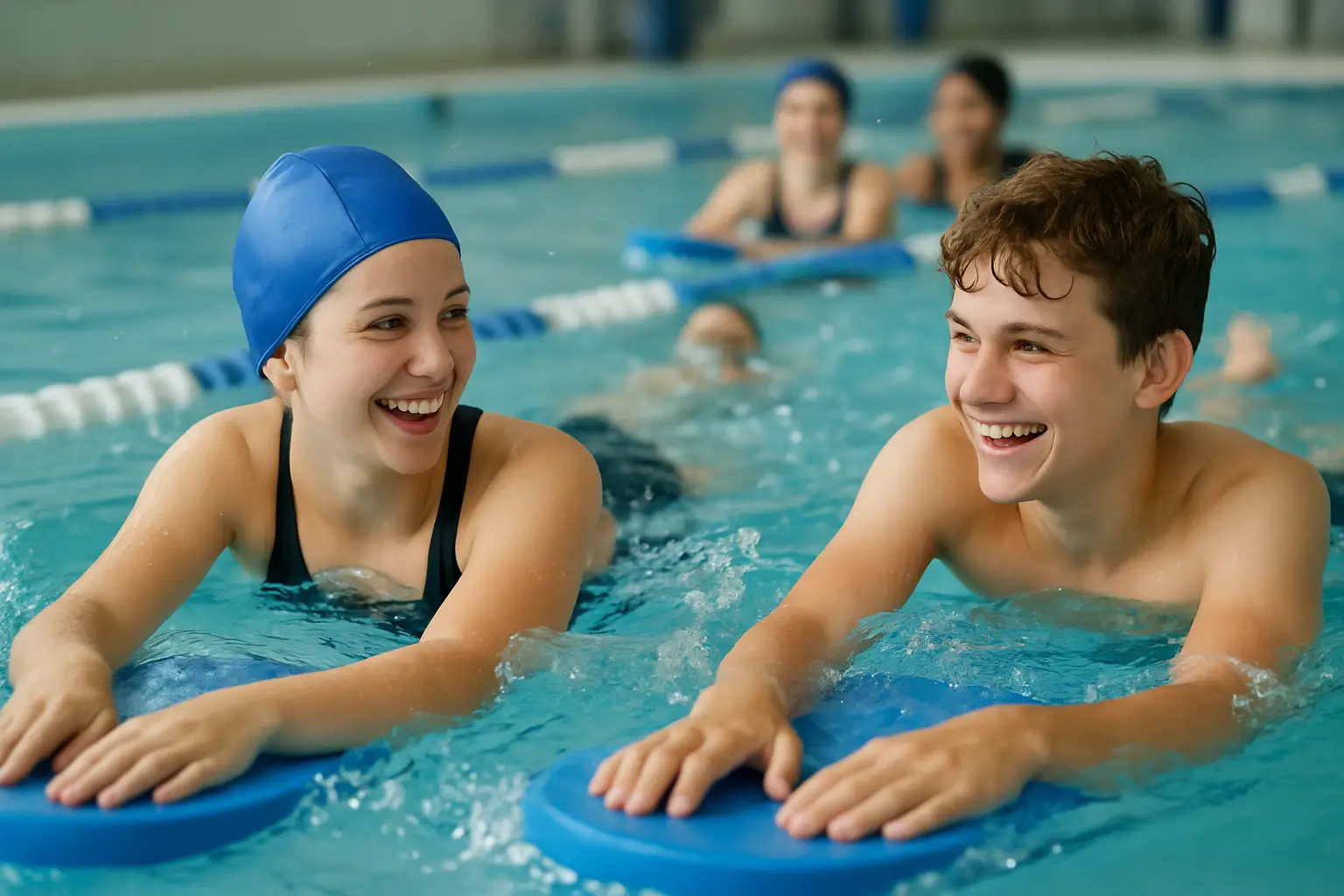
— Drills: kickboard kicks, catch-up drill (one arm waits while the other completes a stroke), fingertip drag (high elbow recovery).
— Backstroke
— Key points: neutral head position, steady hip rotation, continuous flutter kick.
— Drills: single-arm backstroke, vertical kicking for balance, 6-kick switch drill.
— Breaststroke
— Key points: simultaneous arm pull and frog kick timing, glide and body line.
— Drills: pull buoy + kickboard to isolate kick, 2 kicks–1 pull rhythm drills.
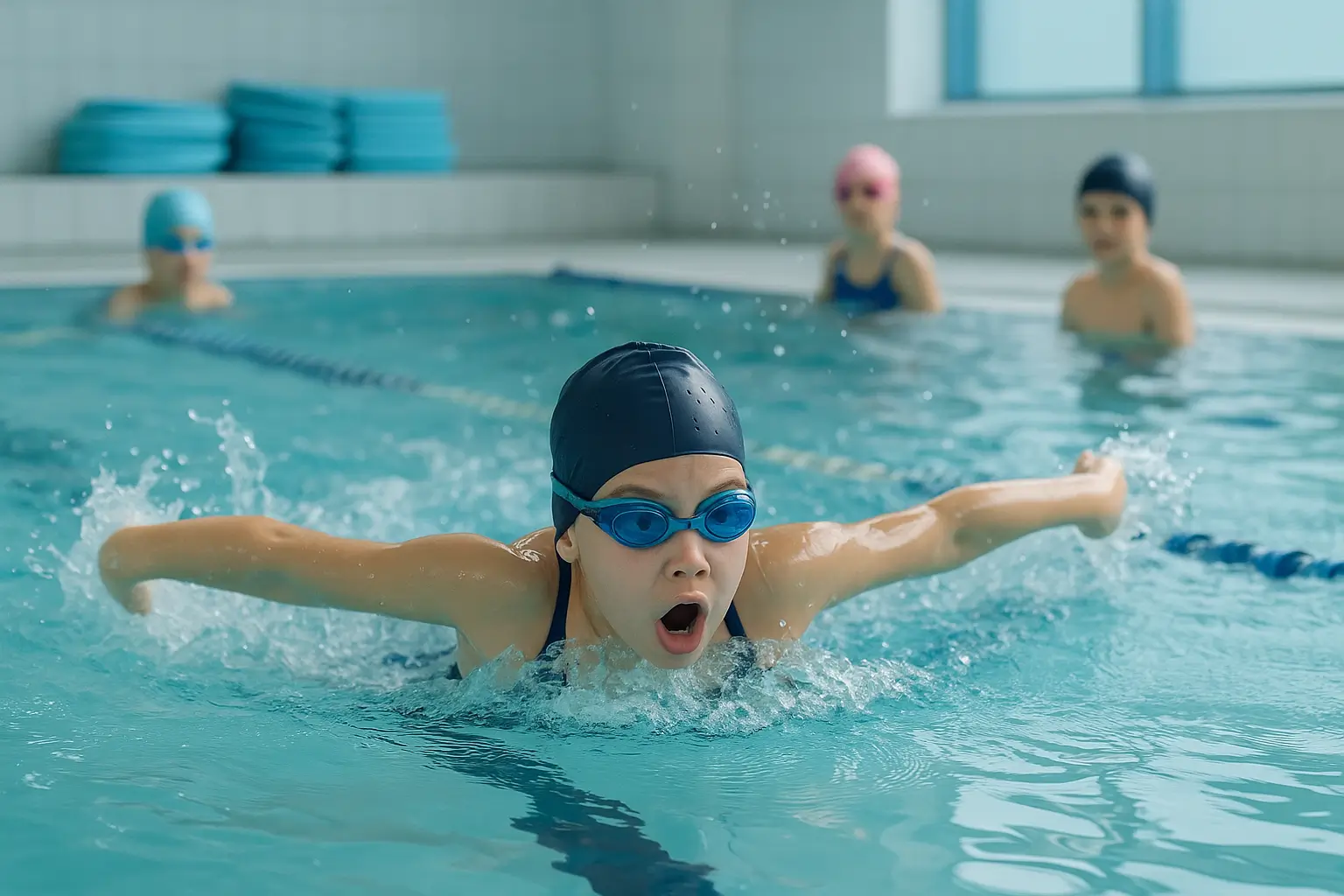
— Butterfly
— Key points: dolphin undulation from hips, coordinated two-kick rhythm, strong core.
— Drills: body wave on side, single-arm butterfly, vertical dolphin kicks.
— Starts and turns
— Introduce basic push-offs and streamline early. Practice tuck turns for younger swimmers, then full tumble/flip turns later.
Keep practices short and varied for young children — attention spans and motor development require frequent positive reinforcement.
Dryland (out-of-pool) training — why and what to do
Dryland training improves strength, mobility, injury prevention and overall athleticism.
Basic components:
— Mobility & activation: shoulder circles, thoracic rotations, ankle mobility, dynamic warm-up.
— Strength (bodyweight/safe resistance): squats, lunges, planks, glute bridges, banded rows.
— Core & posture: dead bug, hollow holds, side planks.
— Rotational power and swim-specific stability: medicine ball chest passes, band-resisted swim pulls.
— Flexibility & recovery: gentle stretches for shoulders, hips and calves; foam rolling.
For children, focus on play-based strength and coordination (obstacle courses, balance games) rather than heavy weights.
Breathing and conditioning (safe guidance)
— Emphasize controlled, rhythmic breathing: exhale underwater, inhale quickly and calmly.
— Avoid competitive breath-hold training for recreational kids — it can be dangerous out of supervised environments.
— Build aerobic base with interval sets appropriate to level: short repeats with consistent rest.
Sample weekly plan (children)
— Ages 3–6: 2 sessions/week, 30–40 minutes each — focus on water comfort, floating and basic kicking.
— Ages 6–9: 2–3 sessions/week, 45 minutes — technique introduction in strokes, fun drills, basic dryland play.
— Ages 10+: 3–5 sessions/week, 60+ minutes — structured stroke work, endurance sets, dryland strength sessions 2×/week.
Adjust frequency by interest, recovery, school schedule and medical advice.
Progress milestones (approximate)
— Comfortably blowing bubbles and putting face in water.
— Independent floating and basic glide.
— Unass