Introduction
Swimming is more than a sport—it’s a life skill, a powerful developmental tool for children, and a year‑round fitness option for residents of Moscow. Whether you’re a parent looking for a reliable swim program or a coach designing lessons, this guide brings practical advice on technique, child development through sport, water safety, and physical training both in and out of the pool.
Why swimming matters for children
— *Holistic development*: Swimming builds motor skills, coordination, balance, and spatial awareness.
— *Cognitive and emotional benefits*: Regular sport participation improves attention, stress regulation, and self-confidence.
— *Health and fitness*: It enhances cardiovascular health, lung capacity, and muscular endurance with low joint impact—especially valuable in early childhood.
— *Socialisation*: Group lessons teach teamwork, communication, and discipline.
Learning progression: stages for children
— Infant/toddler (6 months–3 years)
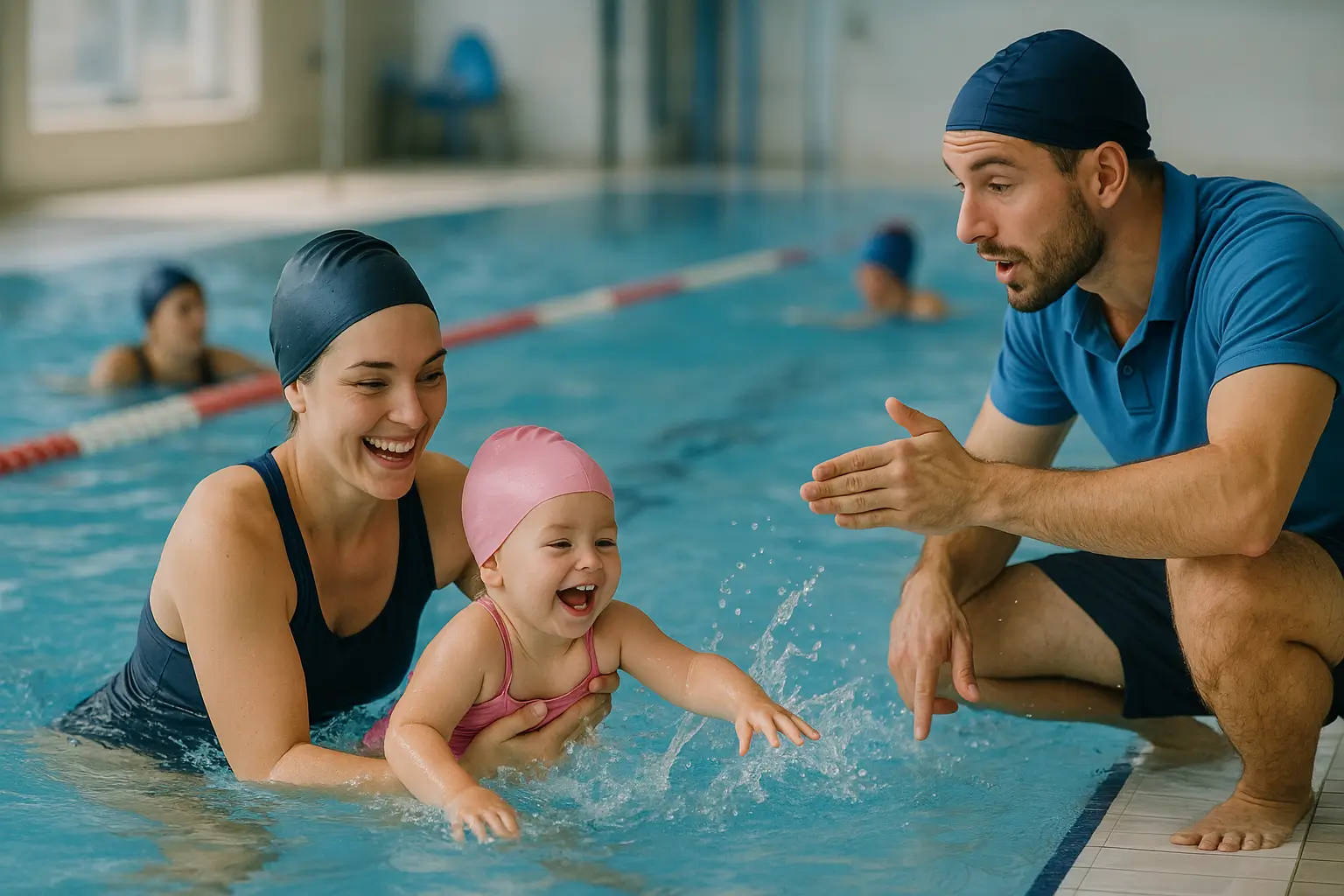
— Focus: water comfort, breath control, basic submersion, parent‑child bonding.
— Methods: short sessions, playful activities, songs, and repetition.
— Preschool (3–5 years)
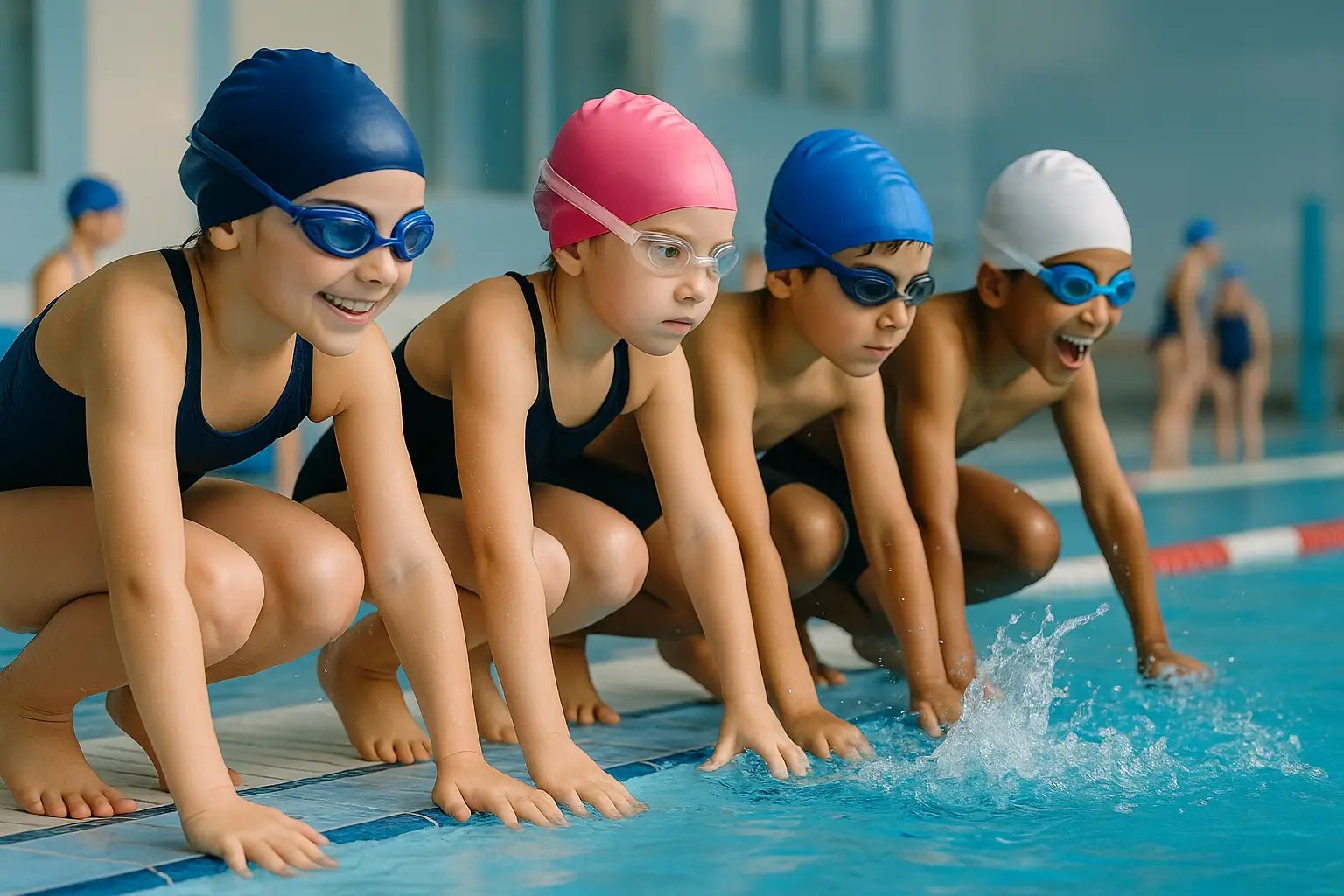
— Focus: independent flotation, basic kicks and arm movements, safe entries/exits.
— Methods: small groups, games that teach skills, teach rules.
— Early school age (6–9 years)
— Focus: stroke mechanics (freestyle, backstroke, introduction to breaststroke), rhythmic breathing, turning basics.
— Methods: technical drills, short sets, positive reinforcement.
— Pre‑adolescent (10–12+) and teenage progression
— Focus: stroke efficiency, endurance, starts and turns, individualized training plans.
— Methods: structured sets, dryland training, competition preparation if desired.
Core swimming techniques to teach (and when)
— Freestyle (front crawl)
— Key points: relaxed body line, rhythmic breathing (every 2–3 strokes), alternating arm recovery, steady flutter kick.
— Early focus: head position and bilateral breathing drills.
— Backstroke
— Key points: flat body position, steady flutter kick, straight-arm entry and finish, rotation for reach.
— Good to teach early to build confidence on the back and improve body alignment.
— Breaststroke
— Key points: simultaneous arm pull, whip kick, glide phase—timing is critical.
— Typically introduced after basic freestyle/backstroke competence.
— Butterfly
— Key points: dolphin body undulation, two kicks per arm cycle, strong core control.
— Best taught to older children with established technique and strength.
— Starts, turns, and finishes
— Introduce progressive drills: push‑offs, streamlines, somersaults, and basic flip turns for freestyle/backstroke.
Teaching tips for Moscow instructors and parents
— Keep sessions short and frequent for young children—2–3 times per week is more effective than a single long session.
— Use games and challenges to reduce fear and increase motivation.
— Provide consistent feedback and celebrate small successes to build confidence.
— Progress by objective, not age—some children are ready earlier for certain skills.
— Maintain small coach‑to‑child ratios for safety and quality instruction.
Water safety — essential rules and advice
— Constant supervision
— Never leave children unattended near water—even a few seconds can be dangerous.
— Learn CPR and basic rescue skills
— Every caregiver and swim instructor should be trained and refreshed regularly.
— Use appropriate flotation as a training aid, not a substitute for supervision or skills.
— Understand drowning signs
— Drowning is often quiet: flailing arms, head low in the water, minimal calling for help—don’t rely on loud splashing.
— Pool rules and hygiene
— Teach children to walk, not run, around pools; obey depth signage; shower before entering the pool.
— Ice and open water safety (seasonal for Moscow)
— In winter, teach children never to walk on or play near ice unless it’s officially declared safe and supervised.
— For summer lakes and reservoirs, choose supervised swimming zones and follow local safety guidance.
— Local context
— Moscow offers many indoor pools and sports centers—confirm lifeguard presence, water quality, and emergency procedures before enrolling.
Dryland training and cross‑training
— Why it matters
— Dryland work builds strength, mobility, balance, and injury resilience—essential for stroke power and speed.
— Age‑appropriate exercises
— Young children: bodyweight activities (animal walks, jumping, balance games), basic coordination drills.
— Older children and teens: core work, hip/glute activation, plyometrics, shoulder stability, resistance band exercises.
— Sample exercises
— Planks, side planks, glute bridges, single‑leg balance, medicine‑ball tosses, standing rows with bands.
— Frequency and load
— 2–3 sessions per week, 20–40 minutes depending on age and training phase. Focus on quality over intensity.
Sample weekly plan for a school‑aged child (non‑competitive)
— Monday: Technique session (30–40 min in pool) + 15 min light dryland core work
— Wednesday: Endurance session (40 min moderate laps with variety of drills)
— Friday: Skill session (starts/turns, drills, short sprints) + mobility/stretching
— Weekend: Family swim or active recovery (light play in pool or outdoor walk)
Choosing a swim school or coach in Moscow
Look for:
— Certified instructors with experience in child aquatic education.
— Clear safety protocols: lifeguards, emergency action plan, CPR training.
— Age‑appropriate groupings and progressive curricula.
— Transparent communication: lesson goals, progress reports, and parental involvement.
— Clean, well‑maintained facilities with temperature control—especially important during Moscow’s cold months.
Competition vs. recreational paths
— Recreational swimming focuses on skills, fitness, and enjoyment.
— Competitive swimming requires increased frequency, structured periodization, dryland training, and psychological preparation.
— Make choices based on the child’s interest, physical readiness, and family schedule—avoid early specialization unless the child is motivated and supported.
Final notes for Moscow families and coaches
— Consistency is the single most important factor: regular, quality practice wins over sporadic, long sessions.
— Prioritise safety—skills like floating, controlled breathing, and safe exits can save lives.
— Encourage enjoyment and mastery rather than pressure; long‑term engagement yields the best physical and developmental outcomes.
If you’d like, I can:
— Draft a one‑month lesson plan for a specific age (e.g., 4–6 or 8–10 years).
— Produce printable safety checklist for parents in Moscow.
— Recommend dryland progressions tailored to competitive or recreational swimmers.