Introduction
Swimming is more than a sport — it’s a life skill, a developmental accelerator for children, and a powerful tool for adult fitness and rehabilitation. In Moscow’s climate, with an abundance of indoor pools, well-run clubs, and municipal programs, structured swimming education can be accessed year-round. This article covers practical technique guidance, how swimming benefits child development, safety on the water, and physical training both in and out of the pool tailored to Moscow families and coaches.
Why Swimming Matters
— Physical health: full-body cardiovascular workout, improved lung capacity, joint-friendly resistance training.
— Motor skills and coordination: bilateral movement patterns, timing, balance and proprioception.
— Cognitive and emotional development: goal-setting, discipline, confidence, stress relief.
— Social skills: teamwork in relay sets, coach-athlete relationships, club culture.
— Safety: reducing drowning risk through competent water skills is especially important for a city with many recreational water sites and seasonal outdoor swimming traditions.
Teaching Swimming Techniques — Progressive Approach
Follow a clear progression. Each stage should be mastery-based, not time-based.
1. Water familiarization
— Activities: blowing bubbles, submerging face, supported floating.
— Goal: reduce fear, establish comfortable breathing rhythm.
2. Breath control and buoyancy
— Drills: exhale underwater, gliding on chest and back, backfloat recovery.
— Key cue: “blow the bubbles out gently, then take a calm breath.”
3. Kicking and body position
— Kicks: flutter kick for freestyle/backstroke, whip kick for breaststroke.
— Drills: kickboard sets, streamline kicks on back, vertical kicking for core control.
— Focus: long body line, small fast kicks from the hips.
4. Arm mechanics and coordination
— Break down strokes: catch-pull-recover (freestyle/backstroke); outsweep-insweep (breast).
— Drills: single-arm swim, sculling, finger drag drill for high elbows.
5. Putting it together: timing and turns
— Combine breathing with arm cycles, practice bilateral breathing.
— Teach basic open turns and streamline off the wall; progress to flip turns when ready.
6. Stroke-specific notes
— Freestyle (front crawl): emphasize high elbow catch and compact recovery; bilateral breathing for balance.
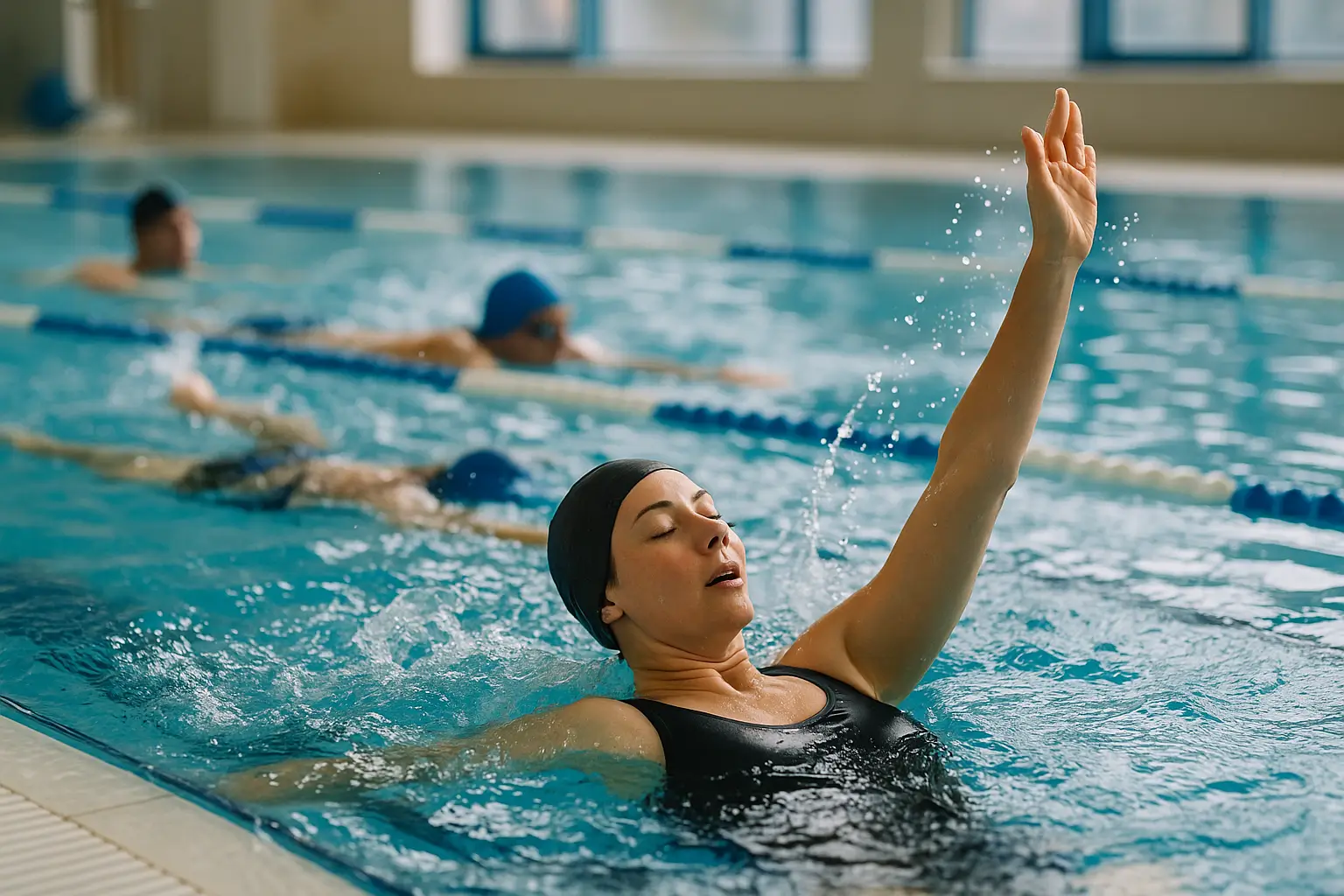
— Backstroke: keep shoulders rotated and hips high; straight streamline off the wall.
— Breaststroke: timing is everything — glide phase after the kick; avoid over-kicking.
— Butterfly: introduced later; focus on core-driven undulation and two-kick rhythm.
Age-Appropriate Development Through Swimming
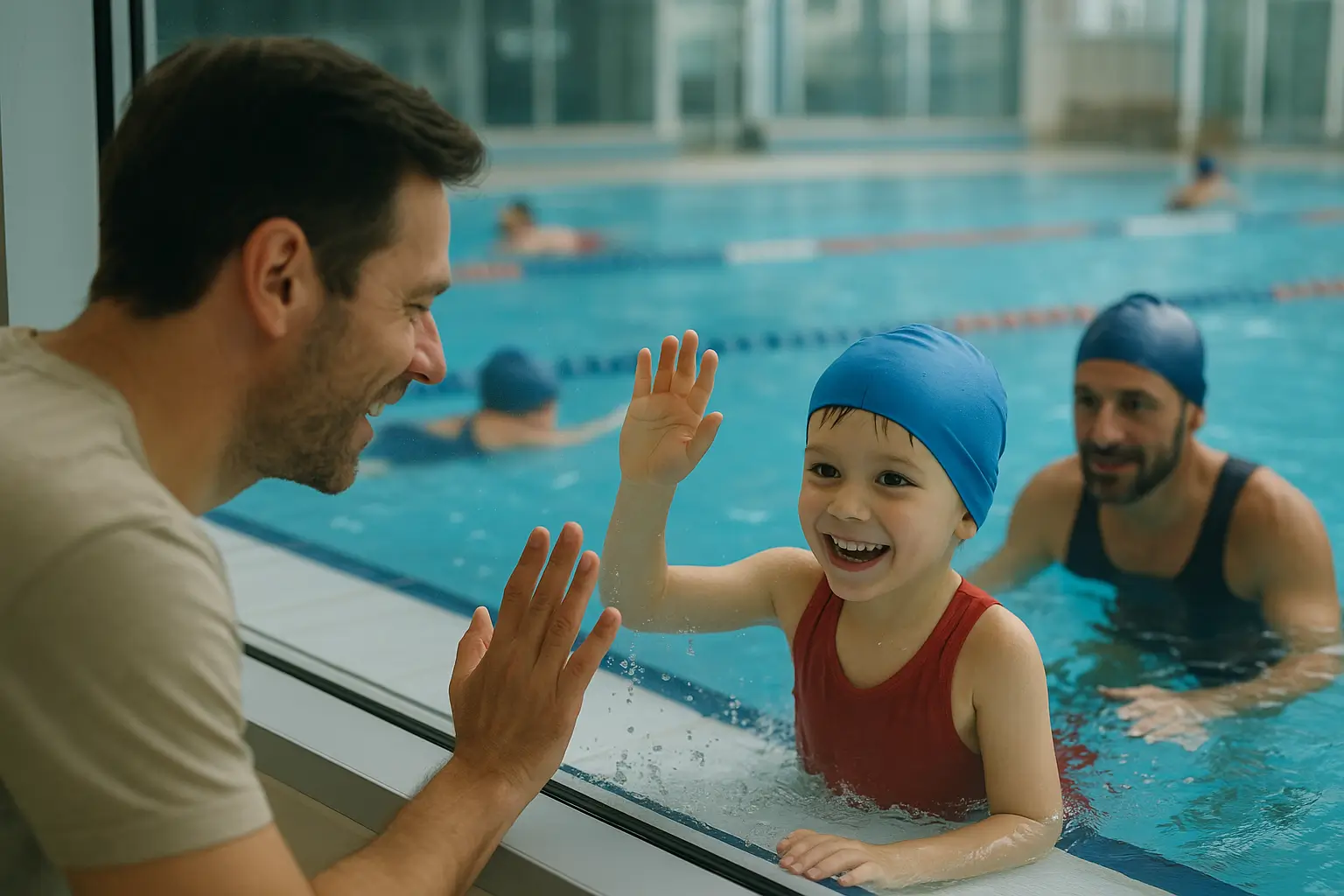
— Infants (6–24 months): parent-and-child classes — water comfort, simple games, introductory breath control. Session length: 20–30 minutes.
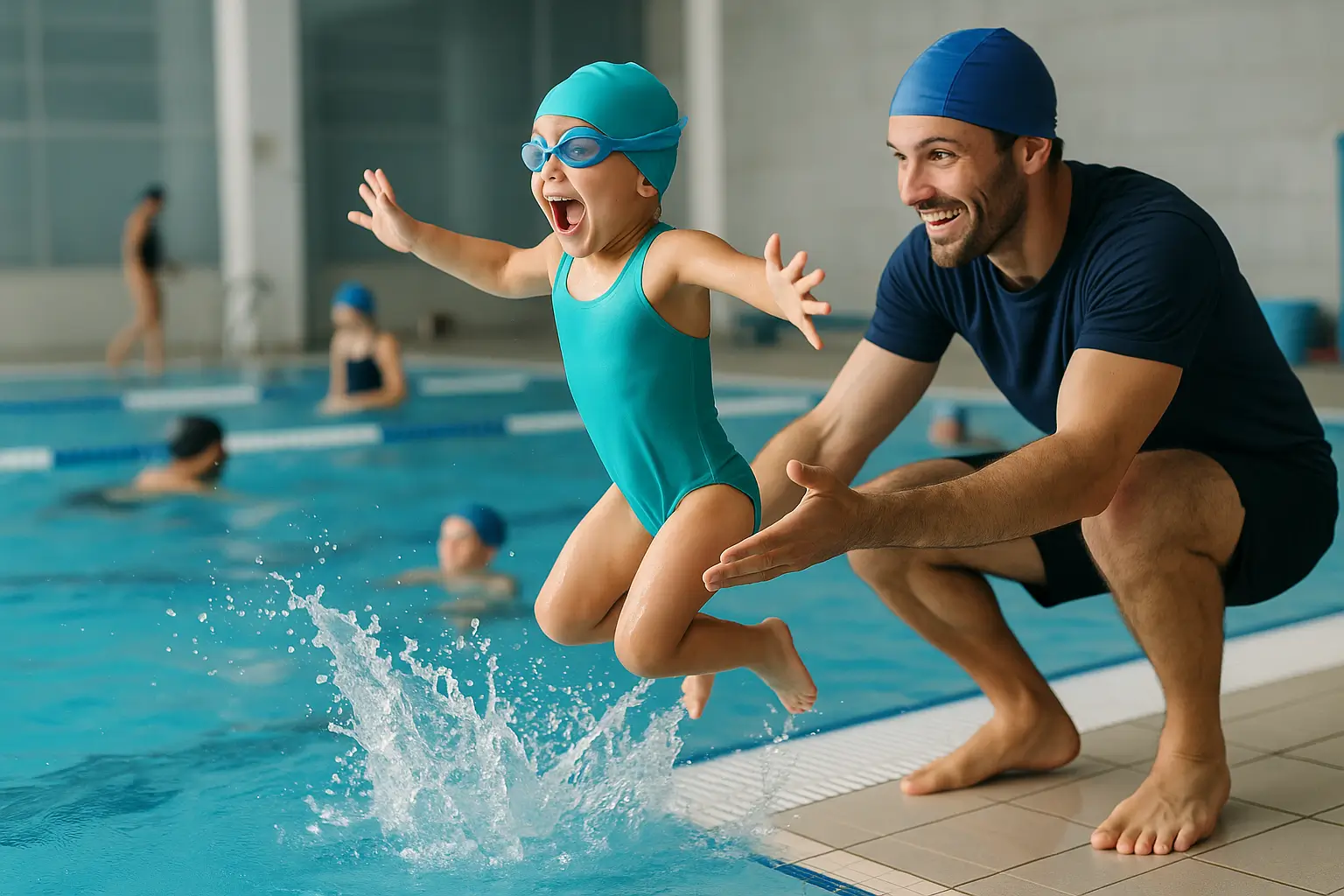
— Toddlers (2–4 years): basic independence in water, kicking, floating with flotation aids. Session length: 30 minutes.
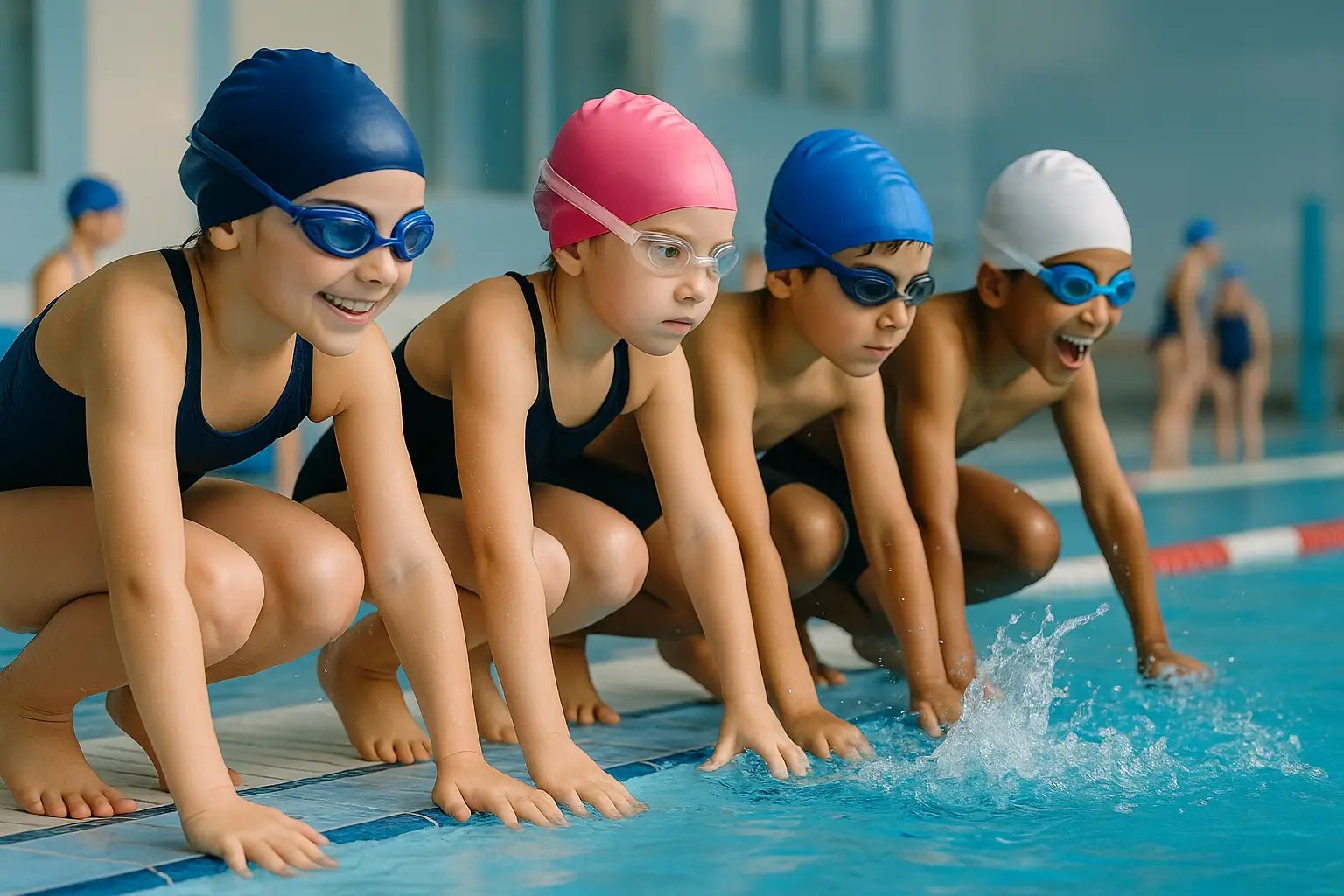
— Preschool (4–6 years): introduce stroke mechanics, short lane swimming, social skills. Session length: 30–40 minutes, 2×/week recommended.
— School-age (6–12 years): structured technique work, endurance building, competitive basics. Sessions: 2–4×/week depending on goals.
— Teens (13+): strength, speed work, advanced technique, dryland conditioning. Training frequency tailored to goals.
Benefits for children:
— Improved attention and school performance through physical activity.
— Emotional resilience through learning to set and reach goals.
— Better posture and reduced risk of obesity.
Safety on the Water — Practical Advice for Moscow Residents
— Supervision: never leave children unattended near water — even shallow water is dangerous. Always maintain arm’s reach for young/non-swimmers.
— Swim where there is a lifeguard and follow posted rules.
— Use approved flotation devices only as an interim measure while teaching independent skills.
— Cold-water/seasonal swimming: beware hypothermia. Dress appropriately; learn safe entry/exit protocols for outdoor swimming.
— Emergency plan: know the pool’s emergency procedures, location of rescue equipment, and how to contact emergency services in Russia (phone 112).
— CPR and first aid: parents and coaches should be trained — local Red Cross and municipal centers in Moscow offer courses.
— Water-quality and hygiene: choose pools with visible maintenance and proper ventilation — chlorination and filtering should be clearly managed.
Safety checklist before lessons:
— Pool depth appropriate for the child’s skill
— Lifeguard on duty
— Instructor certification visible (basic swimming teacher certification or coach credentials)
— Clean facility and secure access points
— Emergency contact and health information on file
Training In the Pool — Sample Sessions & Drills
Beginner child session (30–40 min)
— Warm-up: 5 min splash-play, breathing exercises
— Technique blocks: 10 min kicking drills with board; 10 min arm drills (single-arm freestyle), 5 min combined short swims
— Game-based practice: 5 min retrieval or relay games
— Cooldown: 3–5 min easy float and stretching
Intermediate swimmer (45–60 min)
— Warm-up: 10 min easy swim (mix strokes)
— Technique sets: 15 min focused drills (catch-up, sculling, breaststroke timing)
— Main set: 15–20 min interval work (e.g., 8×50m with set rest for pacing)
— Sprint/skills: 5–10 min starts/turns practice
— Cooldown: 5–8 min easy swim, shoulder mobility
Drill examples
— Finger drag (freestyle recovery) — builds high elbow and relaxed recovery.
— 6-kick switch (breast/kick timing) — develops timing and streamline.
— Catch-up drill — lengthens the stroke and improves alignment.
— Vertical kick — enhances core strength and kick efficiency.
Dryland Training — What to Do Outside the Pool
Goals: mobility, core stability, shoulder strength, leg power.
Sample exercises (2–3×/week)
— Core: planks (front/side), dead bugs, Russian twists
— Shoulders and upper back: banded pull-aparts, external rotations, face pulls
— Legs and hips: squats, lunges, single-leg Romanian deadlifts
— Power and coordination: medicine ball throws, jump squats, plyometric lung